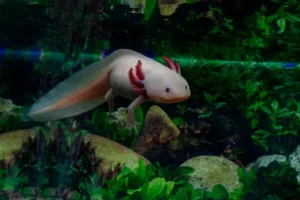
Why Are Axolotls Used in Scientific Research? The Remarkable Science Behind These Creatures

During my five years studying and keeping axolotls, I’ve watched mine regrow entire limbs after accidents. This incredible ability is exactly why scientists around the world dedicate their careers to studying these salamanders. The research happening in laboratories could change medicine forever.

The Primary Reasons Scientists Study Axolotls
Axolotls possess extraordinary biological capabilities that make them perfect research subjects. Their regenerative powers, genetic characteristics, and developmental traits offer insights that no other animal can provide.
Regeneration abilities stand out as the main research focus. Axolotls can regrow complete limbs, parts of their heart, spinal cord, brain tissue, and even portions of their eyes. This happens multiple times throughout their lives without scarring or loss of function.
Large embryos make developmental studies easier. Axolotl eggs are big enough to observe under basic microscopes. Scientists can watch cell division and organ formation in real-time without expensive equipment.
Neoteny provides unique developmental insights. Because axolotls remain in their larval form while reaching sexual maturity, researchers can study juvenile and adult characteristics simultaneously in one organism.
Easy breeding in laboratory settings means consistent research material. Unlike many amphibians, axolotls reproduce readily in captivity with predictable egg production.
Hardy constitution makes them simple to maintain. They tolerate laboratory conditions well and don’t require complex care protocols.
Regeneration Research Breakthroughs
Scientists studying axolotl regeneration have made discoveries that could transform human medicine. I’ve followed this research closely and the progress is remarkable.
When an axolotl loses a limb, special cells called blastemal cells form at the wound site. These cells can become any tissue type needed bone, muscle, nerve, skin, or blood vessels. The limb regrows perfectly, matching the original structure exactly.
Researchers have identified specific genes that activate during regeneration. Some of these genes exist in humans but remain dormant. Understanding how to “turn on” these genes could help humans regenerate damaged tissues.
Studies on spinal cord regeneration show particular promise. Axolotls completely recover from spinal injuries that would paralyze mammals permanently. The mechanisms they use could lead to treatments for paralysis.
Heart tissue regeneration research offers hope for cardiac patients. After heart attacks, human heart muscle dies and scars. Axolotls regenerate functional heart tissue instead of forming scar tissue.
Cancer Resistance Studies
Axolotls rarely develop cancer despite their constant cell division during regeneration. This resistance fascinates oncologists studying tumor formation.
Their cells divide and differentiate repeatedly without becoming cancerous. Scientists are mapping the genetic pathways that prevent tumor development during regeneration.
Understanding these protective mechanisms could lead to cancer prevention strategies or new treatment approaches. The research is still early but shows significant potential.
Developmental Biology Research
Axolotls help scientists understand how embryos develop and how genes control body formation. Their large, transparent eggs make observation easy.
Researchers can inject dyes or genetic markers into specific cells and track them through development. This shows exactly which embryonic cells become which adult structures.
Studies on limb development use axolotls to understand how position information works. How does a cell “know” to become a thumb versus a pinky finger? Axolotls help answer these fundamental questions.
Genetic Research Applications
The axolotl genome was fully sequenced in 2018. At 32 billion base pairs, it’s ten times larger than the human genome the largest genome ever fully sequenced.
This massive genome contains duplicated genes that might explain their regenerative abilities. Scientists are comparing axolotl genes with human genes to find similarities and differences.
Gene editing technology like CRISPR works well in axolotls. Researchers can turn specific genes on or off to see what functions they control. This helps identify which genes are essential for regeneration.
Nerve Regeneration Studies
Unlike mammals, axolotls regrow severed nerves completely. The new nerves connect properly and restore full function. Scientists studying this process hope to help people with nerve damage.
Research shows that axolotl nerve cells release specific chemical signals that guide regrowth. Identifying these signals could lead to therapies that help human nerves regenerate after injury.
Spinal cord studies are particularly advanced. Axolotls can be paralyzed, then watched as they fully recover mobility within weeks. The cellular processes involved are being mapped in detail.
Aging and Longevity Research
Axolotls live 10-15 years in captivity, sometimes longer. Their cells continue regenerating throughout life without the typical decline seen in mammals.
Scientists study how axolotls maintain cellular function across their lifespan. The mechanisms that prevent cellular aging during constant regeneration could inform human aging research.
Telomere research in axolotls shows their chromosomes don’t shorten with age the way human chromosomes do. This might explain their sustained regenerative capacity.
Environmental and Ecological Studies
Wild axolotls are critically endangered, surviving only in a few canals near Mexico City. Conservation biologists study captive populations to understand their ecology and develop preservation strategies.
Water quality research uses axolotls as bioindicators. Their sensitivity to pollutants makes them excellent subjects for testing environmental toxins.
Climate change studies examine how temperature affects their biology. As lake temperatures rise, researchers track physiological changes and survival rates.
Educational Value in Research
Beyond advanced medical research, axolotls serve important educational purposes. High school and undergraduate students use them to learn basic biology concepts.
Their size, hardiness, and interesting characteristics make them ideal for teaching genetics, development, and anatomy. Many scientists developed their passion for biology by studying axolotls in school.
Historical Context of Axolotl Research
Scientists have studied axolotls since the 1800s. Early researchers were fascinated by their neoteny and regeneration.
Laboratories around the world maintain axolotl colonies descended from a small number of animals collected over a century ago. These research populations are genetically distinct from wild populations.
The long history of axolotl research means extensive background knowledge exists. New scientists can build on decades of documented observations.
Future Research Directions
Current research directions include:
Bioprinting using axolotl regeneration principles to grow replacement organs Stem cell therapy informed by blastemal cell behavior Scar-free healing based on axolotl wound repair mechanisms Brain repair following stroke or injury using axolotl neural regeneration pathways
The potential applications seem limitless. Every discovery raises new questions and opens new research avenues.
Why This Research Matters
Why are axolotls used in scientific research? Their unique biological capabilities offer insights unavailable from any other organism. The regeneration, development, and genetic characteristics make them irreplaceable research subjects.
After five years working closely with these animals, I understand why scientists dedicate careers to studying them. The medical breakthroughs coming from axolotl research could help millions of people recover from injuries and diseases currently considered untreatable.
These small salamanders might hold keys to some of humanity’s biggest medical challenges.
Frequently Asked Questions
Q: Are axolotls harmed during scientific research?
Research ethics require minimizing animal suffering. Many studies observe natural regeneration after minor injuries that axolotls recover from completely. Some procedures require euthanasia, but institutional review boards ensure necessity and humane treatment.
Q: Can the regeneration ability be transferred to humans?
Not directly, but understanding the genetic and cellular mechanisms could lead to therapies that activate dormant regenerative capabilities in human cells. This research is ongoing and shows promise.
Q: Why can’t scientists use other salamanders for research?
Other salamanders regenerate too, but axolotls have advantages: they breed easily in labs, stay aquatic (easier to study), have large embryos, and decades of existing research data makes them the standard model organism.
Q: How long until axolotl research leads to human treatments?
Some applications are already in early clinical trials. Others remain years or decades away. Basic research takes time, and translating animal findings to human medicine requires extensive testing.
Q: Are wild axolotls affected by research demand?
No. All research axolotls come from captive bred laboratory populations. Wild populations are protected, and capturing them is illegal. Research actually helps conservation efforts by maintaining genetic diversity.
Q: Do axolotls in research labs live good lives?
Reputable research facilities provide proper housing, clean water, appropriate food, and environmental enrichment. Regulations require meeting their biological needs and minimizing stress throughout their lives.
Administrator
Abdul Wasay is the founder and lead author of Axolotl Portal, a trusted site for axolotl care. He spent almost nine months learning about axolotls, including their tanks, feeding, water care, and common health problems. His knowledge comes from trusted vets, research, and real experience from long term axolotl owners. All Posts by