Where Are Axolotls Found?

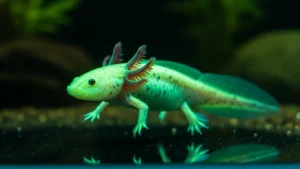
The axolotl with its adorable grin and feathery gills has captured hearts worldwide. But despite being a popular pet across the globe, the axolotl’s natural habitat is incredibly specific and heartbreakingly small. If you’ve ever wondered where these fascinating creatures actually come from, the answer is both simple and tragic.

Where Axolotls Are Found: Complete Overview
| Location Type | Details |
|---|---|
| Native Wild Habitat | Lake Xochimilco, Mexico City, Mexico |
| Geographic Coordinates | Approximately 19.25°N, 99.10°W |
| Elevation | About 7,300 feet (2,200 meters) above sea level |
| Historical Range | Valley of Mexico lake system (Lake Xochimilco and Lake Chalco) |
| Current Wild Population | Fewer than 1,000 individuals remaining (possibly only a few hundred) |
| Lake Chalco Status | Completely drained in the 1970s; axolotls extinct there |
| Lake Xochimilco Size Today | Approximately 45 km² of canals and wetlands (drastically reduced from historical size) |
| Habitat Type | Freshwater canals, wetlands, and chinampas (floating gardens) |
| Water Temperature (Natural) | 50–68°F (10–20°C) year-round |
| Water Depth Range | Typically 3–6 feet in canal areas |
| Substrate in Wild | Muddy, soft bottom with organic matter |
| Vegetation | Dense aquatic plants including water lilies, rushes, and submerged vegetation |
| Conservation Status | Critically Endangered (IUCN Red List) |
| Countries Where Found Wild | Mexico only (endemic species) |
| Countries Where Found Captive | USA, Canada, UK, Germany, Australia, Japan, and 50+ other countries |
| U.S. States Where Found Wild | None (not native to the United States) |
| U.S. States Where Legal as Pets | 46 states (illegal in California, Maine, New Jersey, Virginia, and some cities) |
| Research Institutions | Found in hundreds of labs worldwide (universities, medical research centers) |
| Zoos and Aquariums | 100+ facilities globally maintain axolotl populations |
| Private Ownership | Millions of captive-bred axolotls in home aquariums worldwide |
| Captive Breeding Centers | Mexico (UNAM), USA (Indiana University), Europe (various), Asia (Japan, South Korea) |
| Reintroduction Sites | Limited experimental release programs in restored areas of Lake Xochimilco |
| Similar Species Locations | Tiger salamanders (Ambystoma tigrinum) found throughout North America |
| Closest Related Species | Anderson’s salamander (Ambystoma andersoni) – also endemic to Mexico |
| Urban Distance | Wild habitat is within Mexico City metropolitan area (population 21+ million) |
| Nearest Major City | Mexico City center is approximately 15 miles north |
| Accessibility to Wild Habitat | Lake Xochimilco is accessible by public transportation; tourist boats available |
| Wild Sighting Probability | Extremely low; axolotls are rare, nocturnal, and elusive |
| Historical Distribution | Once found in multiple interconnected lakes covering over 1,000 km² |
| Current Distribution | Fragmented across isolated canal sections; less than 5% of historical range |
| Protected Areas | Xochimilco Ecological Park and Plant Market (UNESCO World Heritage Site since 1987) |
| Primary Threats in Habitat | Pollution, invasive species (carp, tilapia), urbanization, water extraction |
| Water Source | Mountain springs and runoff from surrounding volcanic mountains |
| pH Range in Wild | 7.0–8.0 (slightly alkaline) |
| Invasive Fish Present | Common carp, tilapia, goldfish (compete with and prey on axolotls) |
| Local Name | “Ajolote” or “Axolotl” (from Nahuatl language) |
| Cultural Significance | Sacred to Aztec civilization; associated with god Xolotl |
| First Scientific Description | 1789 by Joseph Gottlieb Kölreuter |
| Years in Captivity | Bred in laboratories since 1864 (over 150 years) |
| Captive Population Estimate | Millions globally (exact numbers unknown) |
| Wild vs. Captive Ratio | Approximately 1,000,000:1 (captive vastly outnumber wild) |
| Genetic Diversity (Wild) | Low and declining due to small population |
| Genetic Diversity (Captive) | Moderate but different from wild populations |
| Color Morphs in Wild | Dark brown/gray with mottled patterns only |
| Color Morphs in Captivity | 20+ varieties including leucistic, golden, melanoid, copper, mosaic, chimera |
| Tourism Impact | High boat traffic in canals may disturb habitat |
| Conservation Organizations | UNAM (National Autonomous University of Mexico), National Geographic, various NGOs |
| Annual Surveys | Conducted by Mexican researchers to monitor wild population trends |
| Last Major Survey | 2020 census found extremely low numbers (details vary by source) |
| Decline Rate | Wild population has declined over 90% since 2000 |
| Breeding Season (Wild) | February to June during cooler months |
| Lifespan in Wild | Estimated 10–15 years if conditions are favorable |
| Lifespan in Captivity | 10–15 years with proper care |
| Main Food in Wild | Small fish, insect larvae, worms, crustaceans |
| Predators in Wild | Herons, large fish, water snakes |
| Human Consumption | Historically eaten by indigenous peoples; rare today |
| Scientific Research Value | High; studied for regenerative abilities in medicine and developmental biology |
| Climate of Native Habitat | Temperate highland climate with mild, wet summers and cool, dry winters |
| Rainfall in Region | Approximately 30 inches (760 mm) annually |
| Habitat Restoration Efforts | Ongoing projects to remove invasive species and replant native vegetation |
| Future Outlook | Uncertain; depends on success of conservation efforts and habitat protection |

The Axolotl’s Native Habitat: Lake Xochimilco
Axolotls (Ambystoma mexicanum) are endemic to Mexico, meaning they exist naturally nowhere else on Earth. Specifically, they’re native to a very small region in the Valley of Mexico, near Mexico City.
Historically, axolotls lived in two major lake systems:
Lake Xochimilco
This is the axolotl’s primary remaining habitat. Lake Xochimilco is actually a network of canals and wetlands in the southern part of Mexico City. Once a vast, ancient lake, it’s now reduced to a series of interconnected waterways surrounded by urban sprawl.
Lake Chalco
Lake Chalco was the second major habitat, but it was completely drained in the 1970s for agricultural development and flood control. Any axolotls that lived there are now extinct in the wild.
Today, Lake Xochimilco is the last place on Earth where wild axolotls can still be found. And even there, their numbers are vanishingly small.
What Does Their Natural Habitat Look Like?
Axolotls evolved in a unique freshwater environment. Here’s what Lake Xochimilco used to offer:
- Cool, clear water — Mountain-fed lakes with temperatures between 50 and 68°F
- Abundant vegetation — Dense aquatic plants that provided shelter and breeding grounds
- Muddy bottoms — Soft substrate for foraging and hiding
- High elevation — The Valley of Mexico sits at about 7,300 feet above sea level
- Year-round water — Permanent lakes with stable conditions
This specific combination of cool, oxygenated water and rich plant life created the perfect home for a creature that never leaves the water and never fully matures into a land-dwelling salamander.
Why Are Wild Axolotls Almost Extinct?
The wild axolotl population has collapsed over the last century. According to recent surveys, there may be fewer than 1,000 axolotls left in the wild possibly far fewer. The International Union for Conservation of Nature (IUCN) lists them as Critically Endangered.
Here’s what happened:
1. Urbanization
Mexico City is one of the largest cities in the world, with over 21 million people. As the city expanded, Lake Xochimilco shrank dramatically. What was once a sprawling lake system is now a tiny fraction of its former size.
2. Water Pollution
The remaining canals are heavily polluted with agricultural runoff, sewage, and industrial waste. Axolotls are extremely sensitive to water quality, and the contamination has made much of their habitat unlivable.
3. Invasive Species
Non-native fish like carp and tilapia were introduced to the lakes for food. These fish compete with axolotls for resources and prey on axolotl eggs and juveniles.
4. Water Drainage
Water is constantly being diverted from Lake Xochimilco to support Mexico City’s massive population. Lower water levels and reduced water flow have degraded the ecosystem.
5. Habitat Fragmentation
What remains of the lake is broken into disconnected patches, making it difficult for axolotl populations to interact and breed.
Are There Axolotls Anywhere Else?
In the wild? No. Axolotls are found naturally only in the canals of Xochimilco.
However, axolotls are thriving in captivity. Millions of axolotls live in:
- Home aquariums worldwide
- Research laboratories (they’re widely used in regenerative medicine studies)
- Educational institutions
- Zoos and aquariums
Ironically, while wild axolotls are on the brink of extinction, captive-bred axolotls are one of the most common exotic pets on the planet. This makes the axolotl both critically endangered and incredibly common at the same time a strange and bittersweet situation.
Conservation Efforts: Is There Hope?
Yes, but time is running out. Several organizations and researchers are working to save the wild axolotl population:
The Axolotl Conservation Project
Scientists from Mexico’s National Autonomous University (UNAM) are leading efforts to restore Lake Xochimilco’s ecosystem. This includes:
- Removing invasive fish
- Restoring native aquatic plants
- Creating protected “axolotl refuges” within the canals
- Breeding and reintroducing captive-born axolotls
Citizen Science Programs
Local communities and researchers have launched “Adoptaxolotl” campaigns, where people can symbolically adopt a wild axolotl. Funds go directly toward habitat restoration and conservation research.
Captive Breeding Programs
Zoos, universities, and conservation groups are breeding axolotls to maintain genetic diversity. Some of these captive-born axolotls may eventually be released back into restored habitats.
The goal isn’t just to save the axolotl it’s to save the entire Xochimilco ecosystem, which supports many other native species.
Frequently Asked Questions
Q: Can I find axolotls in the wild in the United States?
A: No. Axolotls are not native to the U.S. and do not exist in American lakes, rivers, or ponds. Any axolotl you see in the U.S. is either a pet or part of a research program.
Q: Are axolotls found in any other countries?
A: Not in the wild. Axolotls are endemic to Mexico. However, they’re kept as pets and in research labs in countries all over the world.
Q: What’s the difference between wild and captive-bred axolotls?
A: Wild axolotls are typically dark brown or grayish with mottled patterns perfect camouflage for muddy lake bottoms. Captive-bred axolotls come in a rainbow of colors (leucistic, golden albino, melanoid, copper, etc.) due to selective breeding. Genetically, captive axolotls have been bred in labs and homes for over 150 years, so they’re quite different from their wild counterparts.
Q: Could axolotls survive if released into lakes or rivers in other countries?
A: Possibly, but this should never be done. Releasing pet axolotls into the wild is illegal in most places and ecologically irresponsible. They could become invasive species, outcompete native amphibians, or introduce diseases. Plus, most captive axolotls wouldn’t survive without the precise conditions they’re used to.
Q: Why don’t wild axolotls come in pink or white like pet axolotls?
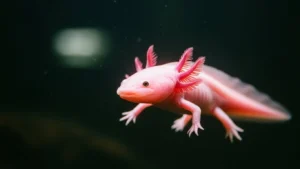
A: Wild axolotls need camouflage to avoid predators. Bright pink or white axolotls would be sitting ducks in the wild. These color morphs only exist because of selective breeding in captivity, where predators aren’t a threat.
Q: How many wild axolotls are left?
A: Estimates vary, but recent surveys suggest there are likely fewer than 1,000 wild axolotls remaining. Some researchers fear the number could be even lower possibly only a few hundred.
Q: Can I visit Lake Xochimilco and see wild axolotls?
A: You can visit Lake Xochimilco it’s a popular tourist destination with colorful boats called “trajineras.” However, seeing a wild axolotl is extremely unlikely. They’re rare, nocturnal, and excellent at hiding. Most visitors never see one.
Q: Are axolotls related to any other animals in Mexico?
A: Yes! Axolotls are part of the “mole salamander” family (Ambystomatidae). They’re closely related to the tiger salamander (Ambystoma tigrinum), which is found throughout North America. Unlike axolotls, tiger salamanders undergo full metamorphosis and live on land as adults.
Q: What would happen if wild axolotls went extinct?
A: It would be a devastating loss for biodiversity. Wild axolotls are part of the Xochimilco ecosystem and play a role in the food web. More broadly, their extinction would mean losing a unique evolutionary branch and a species with incredible regenerative abilities that scientists are still studying.
Q: Can captive-bred axolotls be released to save the wild population?
A: It’s not that simple. Captive axolotls have been bred for generations and may lack the survival skills, genetic diversity, and disease resistance of wild populations. However, carefully managed reintroduction programs are part of conservation efforts but only after significant habitat restoration.
Final Thoughts
Axolotls are found in one place and one place only: the canals of Lake Xochimilco in Mexico City. What was once a thriving population spread across ancient lakes is now reduced to a handful of individuals clinging to survival in polluted, shrinking waterways.
The good news? Axolotls aren’t gone yet. Thanks to conservation efforts, passionate researchers, and a global community of axolotl lovers, there’s still hope for these incredible creatures. By supporting conservation initiatives and spreading awareness, we can help ensure that axolotls don’t just survive in aquariums but continue to thrive in their ancestral home.
If you own an axolotl, you’re part of a global effort to keep this species alive. Treat your pet with care, share their story, and consider supporting organizations working to save their wild cousins.
Administrator
Abdul Wasay is the founder and lead author of Axolotl Portal, a trusted site for axolotl care. He spent almost nine months learning about axolotls, including their tanks, feeding, water care, and common health problems. His knowledge comes from trusted vets, research, and real experience from long term axolotl owners. All Posts by
Related Guides
Why Does My Axolotl Smile? The Cute Truth Every Owner Should Know
Abdul Wasay Khatri
How to Pronounce Axolotl: The Right Way (Finally Explained)
Abdul Wasay Khatri
Buy Best Axolotl Night Light for Kids: Your Ultimate Buying Guide for the Perfect Bedtime Companion
Abdul Wasay Khatri

Can Axolotls Have Rocks in Their Tank?
Abdul Wasay Khatri
What Is the Cutest Axolotl Color? Every Color Ranked
Abdul Wasay Khatri
How to Save a Dying Axolotl: Emergency Steps That Actually Work
Abdul Wasay Khatri
The Complete Axolotl Tank Setup Guide: Everything Your Water Dragon Needs
Abdul Wasay Khatri
Can Axolotls Survive Outside Water? The Critical Facts You Need to Know
Abdul Wasay Khatri
Are Golden Axolotls Rare? Rarity Levels Compared
Abdul Wasay Khatri
Do Axolotls Have Night Vision? The Surprising Truth About Their Eyes
Abdul Wasay Khatri