
What Will Make My Axolotl Happy? A Complete Guide to Axolotl Care

Axolotls are fascinating aquatic pets that need specific conditions to thrive. Let’s explore exactly what these unique salamanders need for a healthy, happy life.

Water Quality: The Foundation of Axolotl Health
Your axolotl’s happiness starts with pristine water conditions. These creatures are sensitive to their environment, so maintaining proper water parameters is essential.
Temperature Requirements
Keep the water between 60-64°F (15-18°C). Axolotls are cold-water animals and can become stressed in warmer temperatures. If your room gets too warm, consider using aquarium fans or chillers to maintain the right temperature.
Filtration and Cleanliness
Install a gentle filter that won’t create strong currents. Axolotls prefer calm water since they’re not strong swimmers. Change 20% of the water weekly to remove waste and keep ammonia and nitrite levels at zero. Nitrates should stay below 20 ppm.
Tank Setup: Creating the Perfect Home
Tank Size Matters
A single axolotl needs at least a 20-gallon tank, though 30-40 gallons is better. These animals grow up to 12 inches long and need room to move around comfortably.
Substrate Choices
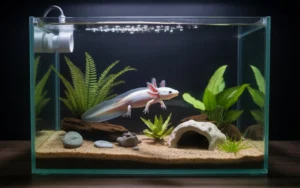
Use fine sand or keep the tank bottom bare. Never use gravel or small stones, as axolotls might swallow them while eating, causing serious digestive problems. Fine sand passes through their system safely if accidentally ingested.
Hiding Spots and Decorations
Add caves, PVC pipes, or aquarium-safe hides where your axolotl can retreat. These shy creatures feel secure when they have places to rest away from bright lights. Include smooth decorations without sharp edges that could damage their delicate skin.
Feeding Your Axolotl Right
Axolotls are carnivores with hearty appetites. Feed adults every 2-3 days, while juveniles need daily meals.
Best Food Options
- Earthworms (nightcrawlers)
- Bloodworms
- Brine shrimp
- Axolotl pellets
- Small pieces of raw shrimp or fish
Drop food near them using tongs, as they hunt by smell and movement. Remove uneaten food within a few hours to prevent water contamination.
Lighting and Environment
Keep lighting dim or indirect. Axolotls don’t have eyelids and bright lights stress them out. A regular day-night cycle helps maintain their natural rhythm, but they don’t need special aquarium lighting.
Tankmates: Should You Add Friends?
Axolotls do best living alone or with other axolotls of similar size. They might nip at each other’s gills occasionally, but this usually isn’t a problem if everyone is well-fed. Avoid keeping fish with axolotls, as they might eat small fish or get stressed by larger ones.
Signs of a Happy Axolotl
- Active swimming during evening hours
- Healthy appetite
- Fluffy, forward-facing gills
- Smooth, undamaged skin
- Relaxed posture when resting
Common Problems to Avoid
Overfeeding
Don’t overfeed your axolotl. Obesity causes health issues and shortened lifespan. If their belly looks bloated, reduce portion sizes.
Poor Water Quality
Test water weekly using an aquarium test kit. Poor conditions lead to stress, disease, and gill damage.
Rough Handling
Only handle your axolotl when necessary, like during tank cleaning. Their slime coat protects them from infection, and handling can damage it.
Frequently Asked Questions
How often should I clean my axolotl tank?
Perform 20% water changes weekly and do a thorough cleaning monthly. Test water parameters weekly to catch problems early.
Can axolotls live with other pets?
Axolotls should only live with other axolotls of similar size. Fish, turtles, and other aquatic animals aren’t suitable tankmates.
Do axolotls need a heater?
No, axolotls need cooler water. You might need a chiller if your home stays above 70°F.
Why are my axolotl’s gills shrinking?
Shrinking gills often indicate poor water quality or high temperatures. Check your water parameters and temperature immediately.
How long do axolotls live?
With proper care, axolotls live 10-15 years in captivity. Some have lived even longer with excellent husbandry.
Can axolotls recognize their owners?
Axolotls can learn to recognize feeding time and may swim to the front of the tank when they see you. They’re more aware than many people think.
What pH level is best for axolotls?
Maintain a pH between 6.5-8.0, with 7.4-7.6 being ideal. Stable pH matters more than hitting a perfect number.
Final Thoughts
Making your axolotl happy comes down to providing clean, cool water, proper nutrition, and a stress-free environment. These low-maintenance pets reward good care with years of companionship. Pay attention to water quality, avoid overfeeding, and give them hiding spots where they feel secure. With these basics covered, your axolotl will thrive and display its unique personality for many years to come.
Administrator
Abdul Wasay is the founder and lead author of Axolotl Portal, a trusted site for axolotl care. He spent almost nine months learning about axolotls, including their tanks, feeding, water care, and common health problems. His knowledge comes from trusted vets, research, and real experience from long term axolotl owners. All Posts by
Related Guides
The Complete Axolotl Tank Setup Guide: Everything Your Water Dragon Needs
Abdul Wasay Khatri
How Do You Spell Axolotl? (Plus Why It’s So Tricky!)
Abdul Wasay Khatri
Buy Best Axolotl Night Light for Kids: Your Ultimate Buying Guide for the Perfect Bedtime Companion
Abdul Wasay Khatri
Where Do Axolotls Live? Complete Habitat Guide (2026 Update)
Abdul Wasay Khatri
Do Axolotls Need a Heater?
Abdul Wasay Khatri
Can Two Axolotls Live Together?
Abdul Wasay Khatri
Can You Have an Axolotl as a Pet? The Honest Truth from Real Owners
Abdul Wasay Khatri
Do Axolotls Have Scales? The Skin Truth
Abdul Wasay Khatri
Axolotl vs Salamander: What’s the Real Difference?
Abdul Wasay Khatri
Can You Touch an Axolotl?
Abdul Wasay Khatri