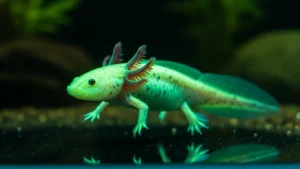
What Is the Cutest Axolotl Color? Every Color Ranked

You’re scrolling through axolotl photos trying to decide which color to get. The pink ones look like cartoon characters. The black ones seem mysterious and cool. The golden ones glow like little treasures. Everyone has an opinion, and nobody agrees.
So which axolotl color actually wins the cuteness contest?
We ranked every major color based on cuteness factors, comparing what makes each one adorable in its own way. Here’s the definitive breakdown.
Cutest Axolotl Colors
| Axolotl Color | Cuteness Level | Why It’s Considered Cute |
|---|---|---|
| Leucistic (Pink) | ⭐⭐⭐⭐⭐ | Smiling face, pink gills, looks like a cartoon character |
| Golden Albino | ⭐⭐⭐⭐☆ | Soft golden glow, gentle and bright appearance |
| GFP (Glow) | ⭐⭐⭐⭐⭐ | Glows under blue light, unique and eye-catching |
| Wild Type | ⭐⭐⭐⭐☆ | Natural look, expressive eyes |
| Melanoid | ⭐⭐⭐☆☆ | Deep black color, dramatic and sleek |
| Copper | ⭐⭐⭐☆☆ | Warm tone, rare and distinctive |
How We Measure Cuteness
Before comparing colors, let’s establish what makes an axolotl cute:
Contrast: Can you see their features clearly? The smile, eyes, and gills need to stand out.
Softness: Does the color feel gentle and approachable, or harsh and intimidating?
Uniqueness: Does it look special, or just like every other pet?
Photography: How well do they show up in pictures? (Yes, this matters in 2026.)
Personality visibility: Can you see their expressions and mood through their coloring?
Now let’s rank them and check out our latest PDF

1. Pink (Leucistic) – The Undisputed Champion
Cuteness score: 10/10
Pink axolotls dominate the cuteness game, and the numbers prove it. Walk into any store and watch which tank draws the biggest crowd. Check social media pink axolotls get the most likes, shares, and comments.
Why pink wins:
The color screams “friendly.” Pink reads as soft, gentle, and non-threatening. Your brain sees pink and thinks “safe, cute, huggable.”
Those dark eyes pop against the pale pink skin. You can see exactly where they’re looking, which creates connection. Eyes are crucial for cuteness we need to see them.
The feathery gills show up perfectly. Against pink skin, the even-pinker gills look like fluffy clouds or fancy hair. This framing-the-face effect maximizes adorableness.
They photograph like dreams. Pink axolotls look good in any lighting, against any background. Your Instagram feed thanks you.
The slight downside:
Pink is almost too popular. If you want to stand out, picking the most common color won’t do it. But we’re ranking cuteness, not uniqueness and pink takes the crown.
Cuteness comparison: Think of pink axolotls as the golden retriever puppies of the aquatic world. Universally loved, impossible to hate, objectively adorable.
2. Golden (Albino) – The Warm Runner-Up
Cuteness score: 9/10
Golden axolotls bring sunshine energy. They’re the happy, glowing option that makes people smile.
What makes gold adorable:
The warm color feels cheerful. Yellow-gold creates positive emotional responses think sunshine, happiness, treasure. Your axolotl becomes a little golden nugget.
Pink eyes add uniqueness. While pink axolotls have dark eyes, golden ones sport pink or red eyes that create an otherworldly, magical appearance.
They glow under good lighting. Proper tank lights make golden axolotls shimmer like they’re sprinkled with fairy dust.
Less common than pink but easier to find than rare colors. You get the “special” factor without the hassle.
Why gold doesn’t quite beat pink:
The pink eyes, while unique, are less expressive than dark eyes. You can’t track where they’re looking as easily, reducing that connection factor.
Some golden axolotls look washed out in poor lighting. They need proper illumination to show their full beauty, while pink axolotls look good anywhere.
Cuteness comparison: If pink axolotls are golden retriever puppies, golden axolotls are yellow lab puppies. Same energy, slightly different vibe, both completely lovable.
3. Wild Type – The Underrated Charmer
Cuteness score: 7/10
Here’s where opinions split dramatically. Some people find wild types boring. Others think they’re the most beautiful because they look natural and real.
The case for wild type cuteness:
Those spots and speckles create visual interest. They’re like freckles on a face adding character and individuality. No two wild types look identical.
The gold shimmer catches light beautifully. When light hits them right, they sparkle like they’re dusted with glitter.
They look like real animals, not cartoon characters. If you appreciate natural beauty over artificial perfection, wild types deliver.
Colors change with mood and lighting. They might look olive-green one moment, dark brown the next, giving you variety.
What holds them back in cuteness rankings:
Dark coloring hides their facial features. You can’t see the smile as clearly. The eyes blend into the spots. This reduces the “aww” factor that comes from seeing expressions.
They don’t photograph as dramatically. Unless you nail the lighting, wild types look like dark blobs in photos. This matters less in person but kills their social media appeal.
People associate them with “common” or “basic” even though they’re the natural form. The bias exists whether it’s fair or not.
Cuteness comparison: Wild types are like mixed-breed rescue dogs. Beautiful in their own way, full of character, but overshadowed by flashier purebreds in popularity contests.
4. Black (Melanoid) – The Cool Kid
Cuteness score: 6/10
Melanoid axolotls bring drama. They’re sleek, mysterious, and undeniably cool. But cool doesn’t always equal cute.
What works for melanoid cuteness:
The solid black creates striking contrast in mixed collections. Put a black axolotl next to pink ones and it becomes the visual anchor.
They look sophisticated rather than babyish. If you want “beautiful” over “cute,” melanoid wins.
The matte finish has a velvety quality. Under the right light, they look like living shadows made of soft fabric.
Less common than pink, giving them novelty points.
Why black scores lower on pure cuteness:
You can barely see their features. The smile, gills, and eyes all blend into the darkness. Without visible expressions, they lose that emotional connection.
They read as serious or edgy rather than adorable. Black codes as “cool” in our culture, not “cute.”
Photos rarely do them justice. Without professional lighting, they become formless dark shapes.
The comparison twist: Some people find this mystery element cute like black cats. But mainstream cuteness rankings favor visibility and softness, where melanoid struggles.
Cuteness comparison: Melanoid axolotls are like black cats. Absolutely gorgeous, but they inspire “wow, beautiful” more than “aww, so cute.”
5. Copper – The Hidden Gem
Cuteness score: 8/10
Copper axolotls deserve way more attention. They bring unique coloring that stands out without being overwhelming.
Why copper ranks high:
The warm brown-copper tone is unusual. You don’t see this color in most pets, making copper axolotls feel special and rare.
Those copper-colored eyes are mesmerizing. Unlike pink eyes that some find eerie, copper eyes look warm and inviting.
They photograph beautifully with warm lighting. Under the right conditions, they glow like autumn leaves or polished pennies.
Less common means fewer people have them. Your copper axolotl won’t look like everyone else’s.
What prevents a higher ranking:
Availability issues mean most people never see copper axolotls in person. You can’t fall in love with something you’ve never encountered.
The color can look muddy in poor lighting. They need good illumination to show their beauty, otherwise they just look brownish.
Not as instantly recognizable as pink or black. People unfamiliar with axolotls might not even realize copper is a color option.
Cuteness comparison: Copper axolotls are like those rare dog breeds you see and think “what is that, and where do I get one?” Special enough to turn heads, cute enough to make people smile.
6. Gray (Axanthic) – The Artistic Choice
Cuteness score: 7/10
Axanthic axolotls look like they walked out of a black-and-white photograph. This gives them artistic appeal that some find incredibly cute.
The cute factors:
That silvery-gray color is genuinely unique. Most pets come in browns, blacks, or light colors. Gray feels fresh and different.
They have an elegant, refined appearance. Less “stuffed animal cute” and more “work of art beautiful.”
The monochrome look photographs well for certain aesthetics. If your whole vibe is minimalist or grayscale, axanthic fits perfectly.
Why they don’t rank higher:
The lack of warm tones makes them feel cold to some people. Cute often requires warmth and softness gray can feel distant.
Harder to find than mainstream colors. Most people never consider axanthic because they’ve never seen one.
The coolness factor overshadows the cuteness factor, similar to melanoid but slightly softer.
Cuteness comparison: Axanthic axolotls are like Russian Blue cats. Strikingly beautiful, undeniably elegant, but “refined beauty” rather than “puppy-dog cuteness.”
The Special Category: Patterns and Combos
Mosaic/Chimera (Multi-colored)
Cuteness score: 9/10
When you combine two colors on one axolotl, cuteness explodes. A half-pink, half-brown axolotl looks like two friends merged together. The novelty factor adds massive appeal.
These rank near the top purely because of uniqueness. Every mosaic is different, making yours genuinely one-of-a-kind.
GFP (Glowing)
Cuteness score: Depends on base color + 2 bonus points
Add glow-in-the-dark ability to any color and you’ve added a “cool” factor. Under blacklight, your axolotl becomes a magical glowing creature.
The novelty makes them cuter to most people. However, the glow itself doesn’t change the base appearance in normal light, so it’s more of a bonus than a primary cuteness factor.
The Verdict: Context Matters
After comparing every color, pink leucistic wins the overall cuteness crown. But the “cutest” color actually depends on what you value:
For maximum universal cuteness: Pink (leucistic)
For warm, happy vibes: Golden (albino)
For natural beauty: Wild type
For sophisticated elegance: Black (melanoid)
For unique warmth: Copper
For artistic appeal: Gray (axanthic)
For show-stopping uniqueness: Mosaic/chimera
What Actually Makes YOUR Axolotl Cutest
Here’s the truth that color comparisons miss: the cutest axolotl is the one swimming in your tank.
Why your axolotl becomes cutest:
You know their personality. That grumpy face they make at feeding time. The way they zoom around when excited. How they perch on their favorite rock. These traits matter more than color.
You see them daily. Familiarity breeds affection. The axolotl you interact with always becomes cuter than photos of strangers’ pets.
Your lighting and setup matter. A well-lit, beautifully decorated tank makes any color axolotl look amazing. Poor conditions make even pink ones look dull.
Emotional attachment trumps objective rankings. If your black melanoid was a gift from someone special, no pink axolotl can compete with that meaning.
The Final Rankings
- Pink (Leucistic) – 10/10 – Universal appeal, maximum visibility, classic cute
- Mosaic/Chimera – 9/10 – Unique patterns, conversation starter, rare beauty
- Golden (Albino) – 9/10 – Warm and cheerful, magical pink eyes, glowing appearance
- Copper – 8/10 – Unusual color, warm tones, hidden gem status
- Wild Type – 7/10 – Natural beauty, shimmer effect, individual variation
- Gray (Axanthic) – 7/10 – Artistic elegance, unique monochrome, refined beauty
- Black (Melanoid) – 6/10 – Sophisticated cool, dramatic contrast, mysterious appeal
But remember: these rankings measure mainstream cuteness appeal. Your personal cutest is whatever makes you smile when you see it.
Choose the color that makes your heart happy. That’s the objectively correct answer for you, regardless of where it ranks on this list. Cuteness is subjective, personal, and ultimately decided by what you love most not by what scores highest in comparisons.
Administrator
Abdul Wasay is the founder and lead author of Axolotl Portal, a trusted site for axolotl care. He spent almost nine months learning about axolotls, including their tanks, feeding, water care, and common health problems. His knowledge comes from trusted vets, research, and real experience from long term axolotl owners. All Posts by
Related Guides
Can Axolotls Live Out of Water?
Abdul Wasay Khatri
Male vs Female Axolotl: Which Is Better? The Complete Comparison
Abdul Wasay Khatri
Can Two Axolotls Live Together Safely?
Abdul Wasay Khatri
Do Axolotls Bite? The Honest Truth About Their Behavior
Abdul Wasay Khatri
Can You Touch an Axolotl?
Abdul Wasay Khatri
Axolotl Squishmallow Names: The Complete Guide
Abdul Wasay Khatri
Can Axolotls Survive Outside Water? The Critical Facts You Need to Know
Abdul Wasay Khatri
Emergency Axolotl Care: What to Do in Critical Situations
Abdul Wasay Khatri
Can Two Axolotls Live Together?
Abdul Wasay Khatri
How Much Does a Baby Axolotl Cost?
Abdul Wasay Khatri