
What Fish Can Live With Axolotls? The Honest Truth

You want to add some fish to your axolotl tank. Maybe some colorful tetras to brighten things up, or a bottom feeder to help with cleanup. The tank looks empty with just one axolotl sitting there.
Before you buy any fish, here’s what you need to know: most fish are a terrible idea with axolotls.

Why Fish and Axolotls Don’t Mix
The problems go both ways. Fish attack axolotls, and axolotls eat fish. It’s a bad match from multiple angles.
Problem 1: Fish Nip at Gills
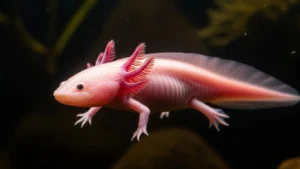
Those feathery gills on your axolotl’s head look like fun toys to fish. Or tasty food. Either way, fish love to nip at them.
What happens: Fish repeatedly bite the gills, causing damage. The axolotl can regenerate them, but constant nipping creates ongoing stress and injury. Your axolotl spends all its time hiding or trying to defend its gills.
Even “peaceful” fish do this. Community fish that wouldn’t hurt other fish will still nip at axolotl gills. It’s movement, it’s interesting, so they investigate with their mouths.
Problem 2: Axolotls Eat Fish
Your axolotl sees a small fish and thinks “snack.” That’s just nature.
The axolotl feeding response: Anything that moves and fits in their mouth becomes food. Fish swimming by trigger this response automatically.
Size doesn’t always matter: Adult axolotls can swallow surprisingly large fish. A 6-inch fish might look safe, but axolotls can stretch their mouth wide and gulp down fish nearly half their body length.
Problem 3: Temperature Mismatch
Axolotls need cold water. Most popular aquarium fish need warm water.
Axolotl temperature: 60-64°F (15-18°C)
Tropical fish temperature: 75-80°F (24-27°C)
The problem: There’s almost no overlap. Water that’s comfortable for axolotls is too cold for tropical fish. Water warm enough for tropical fish slowly kills axolotls.
Problem 4: Different Activity Patterns
Fish are active during the day. Axolotls are more active at night.
This means your fish are swimming around, being visible and interesting during the day. Your axolotl mostly sits still. Then at night when you’re asleep, the axolotl wakes up and hunts your fish.
You miss all the action and wake up to missing fish.
Problem 5: Fast vs Slow
Most fish are quick swimmers. Axolotls are slow and clumsy.
During feeding time: You drop food in. The fish dart over and grab everything. The slow axolotl waddles over and finds nothing left. Your axolotl goes hungry in its own tank.
The result: The fish get fat. The axolotl starves. Even if you try to target feed, fast fish intercept the food.
Fish That Definitely Don’t Work
Let’s get the bad matches out of the way first.
| Fish Type | Why It Fails |
|---|---|
| Goldfish | Need cold water (good) but grow huge, produce tons of waste, and nip at gills aggressively |
| Bettas | Tropical temperature needs (bad), aggressive, will attack axolotl gills |
| Tetras (Neon, Cardinal, etc.) | Tropical temperature, too small (get eaten), nip at gills, too fast during feeding |
| Guppies | Tropical temperature, small (snack-sized), breed constantly creating population problems |
| Cichlids | Aggressive fish that will attack axolotls, most need warmer water |
| Angelfish | Tropical temperature, fin nippers, grow large and become territorial |
| Barbs | Known gill nippers, too active, wrong temperature range |
| Danios | Too fast, wrong temperature, will outcompete for food |
| Mollies/Platys | Tropical temperature needs, breed excessively, too active |
| Catfish (Corydoras, Plecos) | Most need warmer water, plecos get huge, corydoras are too small |
| Oscars | Aggressive predators that will harm or kill axolotls |
| Piranhas | Obviously aggressive, completely incompatible |
Notice the pattern? Almost every popular aquarium fish has deal-breaking problems with axolotls.
Fish That Might Work (With Big Warnings)
These fish have been kept successfully with axolotls by some people. But “successful” doesn’t mean “recommended.”
| Fish Type | Why It Might Work | Why It Still Might Fail |
|---|---|---|
| White Cloud Mountain Minnows | Can handle cooler water (60-72°F), fast swimmers, not too small | Still nip at gills sometimes, temperature range isn’t perfect, can get eaten if axolotl is hungry |
| Zebra Danios | Tolerate cooler water better than other tropicals, very fast (hard to catch) | Still prefer warmer water, super active (stresses axolotl), will dominate feeding time |
| Giant Danios | Bigger than regular danios (less likely to get eaten), fast, cold-tolerant | Still too active, temperature not ideal, may still nip gills |
| Small Koi (temporarily) | Cold water fish, appropriate temperature range | Grow HUGE (need pond eventually), produce massive waste, will outgrow the tank fast |
| Small Goldfish (feeder types) | Cold water fish, cheap to replace if eaten | Gill nippers, high waste production, get too big, often carry diseases |
The reality check: Even these “compatible” options come with serious risks and compromises.
The Actual Best Tank Mates for Axolotls
Forget fish. Here are tank mates that actually work.
Other axolotls: Same species, same needs, no conflict. Keep them the same size to prevent bullying. Make sure tank is big enough (20 gallons per axolotl minimum).
Nothing else: A species-only tank is honestly the best choice. Your axolotl doesn’t need company. It won’t get lonely. One axolotl in a properly sized tank is perfectly happy.
Snails (with caution): Mystery snails or nerite snails might work. Axolotls sometimes eat them, sometimes ignore them. Worth trying if you want something besides the axolotl.
Shrimp (if you’re okay losing them): Ghost shrimp or amano shrimp can work temporarily. Expect your axolotl to eat most of them eventually. Some people add cheap feeder shrimp specifically as snacks.
Why People Keep Trying Fish Anyway
Despite all the problems, people still want to add fish to axolotl tanks.
The reasons:
“The tank looks empty” → Get a bigger axolotl or more decorations, not fish
“I want a cleanup crew” → Axolotl waste needs water changes, not cleanup fish
“Fish are prettier” → Set up a separate fish tank
“My friend does it and it works” → For now. Give it time.
“I saw it on YouTube” → Those videos rarely show what happens 3 months later
The truth: If you want fish, set up a separate tank. Trying to force incompatible animals together usually ends with dead fish, injured axolotls, or both.
What If You Absolutely Must Try
If you’re going to ignore all the warnings and add fish anyway, here’s how to minimize disaster.
Tank size: 40+ gallons minimum. More space means fish have room to escape and axolotl has hunting space.
Hiding spots: Lots of plants, caves, and decorations. Fish need places to hide from the axolotl.
Backup plan: Have a separate tank ready for when things go wrong. And they probably will.
Start with cheap fish: Don’t put your favorite expensive fish in with an axolotl. Start with cheap white cloud minnows you won’t cry over losing.
Watch constantly: Check daily for nipped gills, missing fish, or stress behaviors.
Remove fish at first sign of problems: Nipped gills, stressed axolotl hiding constantly, fish looking beat up—time to separate them immediately.
Accept losses: Some fish will get eaten. If you can’t handle that, don’t add fish.
The Temperature Compromise Problem
Some people try to split the difference on temperature. Run the tank at 68-70°F—warmer than ideal for axolotls, cooler than ideal for tropical fish.
Why this fails:
Your axolotl is now chronically stressed from too-warm water. Over time, this shortens lifespan and increases disease risk.
Your tropical fish are sluggish and unhealthy from too-cold water. They become more susceptible to ich and other problems.
Nobody wins. Both animals are compromised. This is the worst approach.
Better choice: Keep the tank at proper axolotl temperature (60-64°F) and only consider truly cold-water fish. Or keep it at proper tropical temperature and don’t keep axolotls.
Real Stories From Keepers
“I added neon tetras. Within a week, my axolotl’s gills were shredded. Removed the tetras, gills grew back fine.”
“My axolotl lived with white cloud minnows for three months. Then one day I counted the fish and realized there were only 4 left out of 10. Never saw it happen—the axolotl just slowly hunted them at night.”
“Tried goldfish as tank mates. My axolotl was constantly hiding because the goldfish chased it. Water quality went to hell from goldfish waste. Removed them after two weeks.”
“Added giant danios thinking they were too big to eat. My axolotl managed to swallow one and choked. Emergency vet visit. Never again.”
“Ghost shrimp lasted about a month before the axolotl figured out they’re food. Now I just add them occasionally as treats.”
Notice the pattern? Even “successful” combinations usually mean accepting eaten fish, stressed animals, or temporary arrangements.
The Bottom Line
Can fish live with axolotls? Technically yes, some fish can survive with axolotls temporarily under specific conditions.
Should fish live with axolotls? No. The risks and compromises aren’t worth it.
Best practice: Keep axolotls in a species-only tank. If you want fish, set up a separate aquarium.
If you try anyway: Use cold-water fish like white cloud minnows, keep the tank large, provide lots of hiding spots, and accept that problems will probably happen eventually.
Your axolotl doesn’t need fish friends. It needs proper temperature, clean water, good food, and appropriate tank size. Give it those things and skip the fish.
The tank might look “empty” to you, but to your axolotl, it’s home. And a stress-free home is better than a crowded tank full of incompatible species.
Administrator
Abdul Wasay is the founder and lead author of Axolotl Portal, a trusted site for axolotl care. He spent almost nine months learning about axolotls, including their tanks, feeding, water care, and common health problems. His knowledge comes from trusted vets, research, and real experience from long term axolotl owners. All Posts by
Related Guides
Axolotl vs Salamander: What’s the Real Difference?
Abdul Wasay Khatri
How Long Can Axolotls Go Without Food? Understanding Starvation and Feeding Gaps
Abdul Wasay Khatri
How Big Do Axolotls Get? Growth Timeline & Size Guide
Abdul Wasay Khatri
How Often Do You Feed an Axolotl?
Abdul Wasay Khatri
Are Axolotls Good Pets?
Abdul Wasay Khatri
Do Axolotls Need a Heater?
Abdul Wasay Khatri
What’s The Scientific Name For Axolotl? (Easy Answer For Kids!)
Abdul Wasay Khatri
Why Does My Axolotl Smile? The Cute Truth Every Owner Should Know
Abdul Wasay Khatri
How Do You Spell Axolotl? (Plus Why It’s So Tricky!)
Abdul Wasay Khatri
How to Treat Axolotl Fungus: A Simple Guide
Abdul Wasay Khatri