
What Are GFP Axolotls? The Complete Guide to Glow-in-the-Dark Water Creatures

If you’ve ever seen an axolotl that glows under blacklight, you’ve witnessed the magic of GFP technology. These fascinating water creatures have captured the hearts of pet owners and science fans around the world.
Want to see the real colors of axolotls? Check out this PDF!
Understanding GFP Axolotls
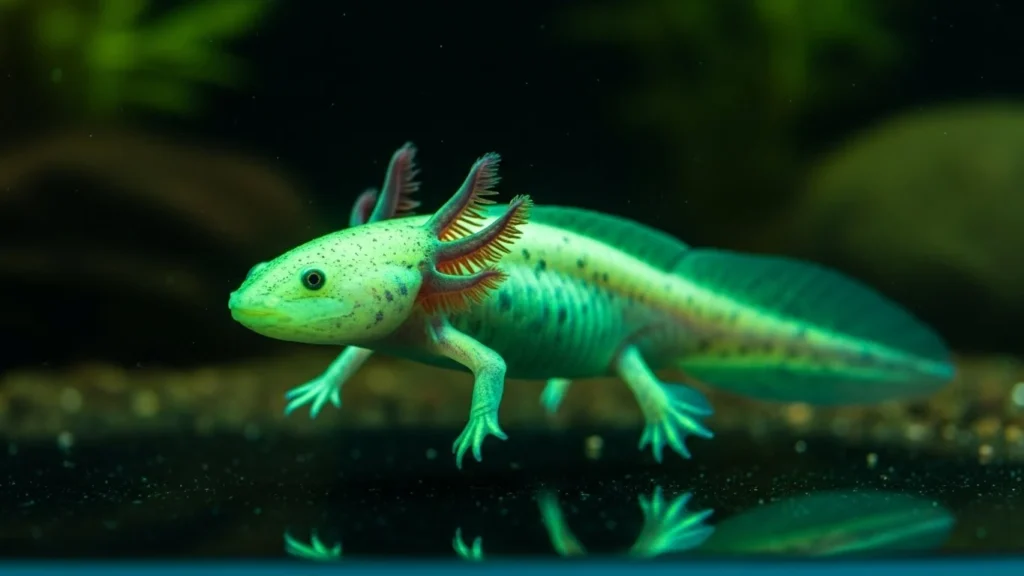
GFP stands for Green Fluorescent Protein. GFP axolotls are special salamanders that glow bright green when placed under UV light or blacklight. This glowing effect comes from a protein originally found in jellyfish that scientists added to the axolotl’s DNA.
The glow doesn’t hurt the animal at all. During normal daylight, GFP axolotls look just like regular axolotls. But turn on a blacklight, and they light up like nature’s own night light.
How Do Axolotls Get the Glowing Gene?
Scientists create GFP axolotls by inserting the fluorescent protein gene into fertilized eggs. This process happens at the very start of the axolotl’s life, making the glow a natural part of their body.
The green fluorescent protein spreads through their entire body, including:
- Skin and outer layers
- Internal organs
- Bones and skeleton
- Gills and feathery structures
Once an axolotl has the GFP gene, it passes this trait to its babies. This means breeding two GFP axolotls will produce offspring that also glow under UV light.
Different Colors and Types
While green is the most common glow color, breeders have developed other fluorescent varieties. Some axolotls glow yellow, while others show blue or cyan colors under blacklight.
The base color of the axolotl affects how the glow appears. Popular combinations include:
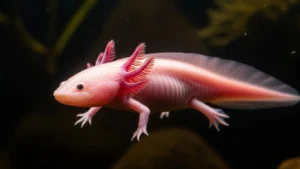
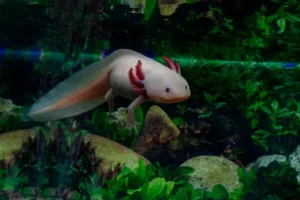
Leucistic GFP Axolotls: These white or pale pink axolotls with the GFP gene create a stunning contrast. Their light body color makes the green glow stand out even more.
Golden Albino GFP: These yellow-gold axolotls produce a unique yellowish-green glow that looks different from standard GFP versions.
Wild Type GFP: Dark brown or black axolotls with GFP still glow, though the effect is less visible through their darker skin.
Melanoid GFP: Solid black axolotls can carry the gene, but the glow only shows in their eyes and through thinner tissue areas.
Taking Care of Your GFP Axolotl
Good news for potential owners: GFP axolotls need the same care as regular axolotls. The glowing gene doesn’t change their basic needs or health requirements.
Water Requirements
Keep your tank water between 60-64°F (15-18°C). Axolotls are cold-water creatures and will get stressed in warm temperatures. Room temperature water is often too warm, so many owners need a water chiller.
The water pH should stay between 6.5 and 8.0. Test your water weekly to catch any changes early.
Change 20-30% of the water each week. This removes waste products and keeps the environment fresh.
Tank Setup
A single adult axolotl needs at least a 20-gallon tank. Bigger is better, especially if you plan to keep more than one.
Use fine sand or a bare bottom tank. Never use gravel, as axolotls can accidentally swallow stones while eating, which causes serious health problems.
Keep the lighting dim. Axolotls have no eyelids and dislike bright lights. Low lighting also helps prevent algae growth.
Add hiding spots using caves, plants, or decorations. These help your axolotl feel safe and reduce stress.
Feeding Your Glowing Friend
Feed adult axolotls 2-3 times per week. Young axolotls need daily feeding until they reach full size around one year old.
Best food options include:
- Earthworms (nightcrawlers)
- Blackworms
- Bloodworms
- Axolotl pellets
- Small pieces of raw shrimp
Avoid feeder fish, as they can carry diseases and don’t provide complete nutrition.
Health Considerations for GFP Axolotls
The GFP gene itself doesn’t cause health problems. These axolotls live just as long as regular ones, typically 10-15 years with proper care.
Watch for common axolotl health issues:
Fungal infections: White cotton-like growth on the skin or gills. Usually caused by poor water quality or injuries.
Bacterial infections: Red, inflamed areas on the body. Requires quick treatment to prevent spreading.
Impaction: Blockage in the digestive system from swallowing gravel or other objects. This is a serious emergency.
Stress: Shown through curled tail, floating, or refusing food. Often caused by warm water, bright lights, or aggressive tank mates.
The glowing property makes it easier to spot some health issues. You can see internal problems more clearly when examining your axolotl under blacklight.
Where to Find GFP Axolotls
GFP axolotls cost more than regular varieties because of the special breeding process. Prices typically range from $60 to $150, depending on color combination and local availability.
Buy from reputable breeders who can prove their animals are healthy. Good breeders will:
- Answer questions about care and genetics
- Show pictures of the parents
- Guarantee the health of their animals
- Ship safely with proper insulation
Avoid buying from pet stores unless they specialize in aquatic animals. Many chain stores don’t understand axolotl needs and may keep them in poor conditions.
Online breeders ship axolotls safely across the country. They pack the animals with temperature control and plenty of oxygen for the journey.
Breeding GFP Axolotls
Breeding these glowing creatures follows the same process as regular axolotl breeding. The main difference is ensuring at least one parent carries the GFP gene.
Two GFP parents will produce 100% GFP babies. One GFP parent with a regular axolotl produces roughly 50% glowing offspring.
Before breeding, make sure you:
- Have space for hundreds of baby axolotls
- Can provide proper food for growing babies
- Know how to cull unhealthy embryos humanely
- Have homes lined up for the offspring
Breeding requires cooling the water to trigger spawning behavior. The female lays eggs that the male fertilizes. Eggs hatch in about two weeks at room temperature.
The Science Behind the Glow
The green fluorescent protein comes from the crystal jellyfish, a creature living in the Pacific Ocean. Japanese scientist Osamu Shimomura discovered this protein in 1962, work that eventually won him a Nobel Prize.
Scientists use GFP as a research tool to track cells and study development. By attaching the glowing gene to other genes, researchers can see where and when certain processes happen in living organisms.
In axolotls, GFP helps scientists study regeneration. These amazing creatures can regrow lost limbs, parts of their brain, heart, and other organs. The glow lets researchers track how cells move and change during this healing process.
Common Questions About GFP Axolotls
Do they glow all the time? No, you only see the glow under UV or blacklight. In normal light, they look like regular axolotls.
Is the glow harmful? Not at all. The protein is completely safe and doesn’t affect the axolotl’s health or behavior.
Can I use blacklight all day? You shouldn’t. While short periods under blacklight are fine, extended exposure stresses axolotls. Use blacklight sparingly, maybe 10-15 minutes at a time for viewing.
Do GFP axolotls need special food? No, they eat the same diet as any axolotl. The glow doesn’t change their nutritional needs.
Will the glow fade over time? The fluorescent protein stays active throughout the axolotl’s life. The glow intensity remains consistent as they age.
Legal Considerations
Check your local laws before buying any axolotl. Some states and countries ban ownership of these animals because they’re endangered in the wild.
States where axolotls are illegal include California, Maine, New Jersey, and Virginia. Some cities have their own restrictions even if the state allows them.
GFP axolotls face the same regulations as regular axolotls. The genetic modification doesn’t add extra legal restrictions in most places.
Why People Love GFP Axolotls
These glowing pets offer a unique experience that combines science and nature. Watching them swim under blacklight creates a magical display that never gets old.
Kids especially enjoy the educational aspect. Learning about genetics, fluorescence, and animal care all comes together in one fascinating package.
Photographers and content creators appreciate the stunning visuals. GFP axolotls make incredible subjects for photos and videos, especially with creative lighting.
The novelty factor can’t be ignored either. Not many people can say they own a creature that glows in the dark.
The Future of Fluorescent Pets
As genetic technology advances, we may see more fluorescent pet varieties. Scientists have already created glowing fish, rabbits, and other animals for research purposes.
The pet trade continues to develop new and interesting color morphs. Combining different fluorescent proteins might produce axolotls that glow multiple colors.
However, responsible breeding remains important. Breeders should focus on health and genetic diversity rather than just creating the flashiest animals.
Making the Right Choice
Before getting a GFP axolotl, consider whether you can meet their needs. These aren’t low-maintenance pets like goldfish.
You’ll need to invest in:
- A proper tank (20+ gallons)
- Cooling equipment for warm climates
- Quality filtration
- Regular water testing supplies
- Appropriate food sources
- Potential veterinary care
The time commitment includes weekly water changes, regular feeding, and daily monitoring of water temperature and behavior.
If you can provide these essentials, a GFP axolotl makes a rewarding and fascinating companion. Their unique appearance combined with their friendly personality creates a pet experience unlike any other.
Wrapping Up
GFP axolotls represent an interesting intersection of science and pet keeping. These glowing salamanders aren’t just pretty to look at they’re living examples of how genetic research can create something both educational and entertaining.
Whether you’re drawn to their scientific background or simply want a pet that glows under blacklight, GFP axolotls deliver a one-of-a-kind experience. With proper care, these remarkable creatures will brighten your life for over a decade.
Remember that despite their special glow, they’re still living animals with specific needs. Research thoroughly, prepare your setup completely, and buy from trusted sources. Do things right, and you’ll enjoy years of watching your very own glowing aquatic friend.
Administrator
Abdul Wasay is the founder and lead author of Axolotl Portal, a trusted site for axolotl care. He spent almost nine months learning about axolotls, including their tanks, feeding, water care, and common health problems. His knowledge comes from trusted vets, research, and real experience from long term axolotl owners. All Posts by
Related Guides
Can an Axolotl Regrow Its Heart? The Truth About Nature’s Master Regenerator
Abdul Wasay Khatri
How Many Axolotls Are Left? The Shocking Numbers
Abdul Wasay Khatri
Are Blue Axolotls Real? The Truth About Blue Axolotl Colors
Abdul Wasay Khatri
Why Does My Axolotl Smile? The Cute Truth Every Owner Should Know
Abdul Wasay Khatri
Do Axolotls Have Night Vision? The Surprising Truth About Their Eyes
Abdul Wasay Khatri
Where Are Axolotls Found?
Abdul Wasay Khatri
How to Save a Dying Axolotl: Emergency Steps That Actually Work
Abdul Wasay Khatri
Do Axolotls Bite? The Honest Truth About Their Behavior
Abdul Wasay Khatri
Is It Legal to Own an Axolotl in Texas? The Complete Answer
Abdul Wasay Khatri
Do Axolotls Need a Filter?
Abdul Wasay Khatri