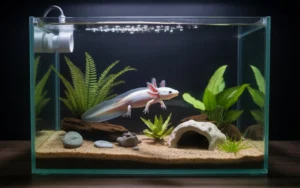
Types of Axolotls: Complete Morph Comparison Guide

You’re standing in front of a tank full of axolotls. Some are pink, some are black, some are golden, and one even has a split-colored face. They all look completely different, yet they’re supposedly the same animal.
Which one is which? What makes them different? And how do you tell them apart?
Let’s compare every axolotl morph side-by-side so you can identify them instantly.

The Foundation: One Species, Many Colors
Every axolotl belongs to the same species: Ambystoma mexicanum. What we call “types” are actually morphs genetic color variations within that single species.
Think of it like human hair colors. Blonde, brown, black, and red hair are all variations of the same species, just with different pigment genes activated. Axolotls work the same way.
Main Morph Comparison Chart
Here’s how the primary morphs stack up against each other:
| Feature | Wild Type | Leucistic | Albino | Melanoid | Axanthic |
|---|---|---|---|---|---|
| Body Color | Dark olive-brown | Pink/white | Pale gold/white | Solid black | Gray/silver |
| Eye Color | Gold/olive | Black | Pink/red | Black | Dark gray/black |
| Pattern | Spotted/speckled | Minimal spots | No pattern | No pattern | No pattern |
| Shimmer | Yes (gold flecks) | No | No | No | No |
| Pigment Type | Full pigmentation | Reduced melanin | No melanin | Extra melanin | No yellow/red |
| Natural Form | Yes | No | No | No | No |
| Light Sensitivity | Low | High | Very high | Low | Medium |
| Visibility of Health Issues | Poor | Excellent | Excellent | Poor | Good |
Head-to-Head Morph Comparisons
Wild Type vs Melanoid: The Dark Duo
Both morphs appear dark, but they’re dramatically different once you know what to look for.
Wild Type Characteristics:
- Dark brown or olive base color
- Covered in black spots and speckles
- Gold or greenish shimmer catches the light
- Eyes have color (gold, olive, or bronze tones)
- Looks camouflaged and natural
- Shows color variation under different lighting
Melanoid Characteristics:
- Uniformly dark throughout
- Solid black or charcoal gray
- Completely matte appearance with no shine
- Eyes are pure black with no other color
- Looks like a solid shadow
- Color stays consistent regardless of lighting
Quick identification: Hold a light near them. Wild types shimmer with gold flecks. Melanoids stay solid and matte.
Why it matters: Wild types show their natural survival coloring. Melanoids have a genetic mutation that removes iridophores (the cells that create shimmer), making them purely dark.
Leucistic vs Albino: The Light Confusion
This comparison confuses more people than any other. Both look pale, but they’re completely different morphs.
Leucistic Characteristics:
- Pink or pale peachy body
- Dark eyes (black, brown, or dark gray)
- Sometimes has light freckles or spots
- Pink color comes from blood vessels showing through skin
- Can have light golden shimmer on body
- Skin appears more opaque
Albino Characteristics:
- Pale white, cream, or golden body
- Pink or red eyes (this is the key difference)
- Never has dark pigment anywhere
- Color is more uniform yellow-gold tone
- No shimmer or metallic sheen
- Skin appears more translucent
The easy test: Look at the eyes. Dark eyes = leucistic. Pink/red eyes = albino. That’s all you need to remember.
Golden Albino vs White Albino: Within the albino category, two variations exist. Golden albinos have yellow-gold bodies. White albinos are extremely pale, almost white. Both have pink eyes. The difference is just intensity of the yellow pigment (xanthophores).
Why the confusion exists: Both morphs lack significant dark pigment, so people lump them together. But leucistic axolotls still produce some melanin (visible in their dark eyes), while albinos produce none.
Leucistic vs White Albino: The Pale Pair
These two look nearly identical until you check the eyes.
Side-by-side differences:
| Feature | Leucistic | White Albino |
|---|---|---|
| Body color | Slightly pink-toned | Pure white/cream |
| Eye color | Black/dark brown | Pink/red |
| Skin opacity | More opaque | More translucent |
| Freckling | Sometimes present | Never present |
| Blood vessel visibility | Moderate | High |
| UV sensitivity | High | Very high |
In photos: Nearly impossible to tell apart if the eye color isn’t visible. Both photograph as pale/white axolotls.
In person: The eye color gives it away instantly. If you see pink or red eyes, it’s albino. Dark eyes mean leucistic.
Golden Albino vs Copper: The Yellow Question
Both morphs display golden-yellow coloring, leading to frequent misidentification.
Golden Albino:
- Bright yellow-gold body
- Pink or red eyes
- Uniform color distribution
- Created by lack of melanin plus presence of yellow pigment
- Pure albino genetics
Copper:
- Copper, tan, or brownish-gold body
- Reddish-brown or copper-colored eyes
- Slightly mottled appearance
- Created by combining albino and melanoid genes
- More complex genetics
The distinction: Eye color is your guide. Pink/red eyes = golden albino. Reddish-brown/copper eyes = copper morph.
Copper morphs also tend to have more texture and variation in their coloring, while golden albinos look more uniform.
Axanthic vs Melanoid: Grayscale Variations
Both lack warm tones, but they achieve it differently.
Axanthic:
- Gray or silver throughout
- Lacks ALL warm colors (yellow, orange, red, brown)
- May have some pattern variation
- Eyes are dark but can have slight color
- Looks like a black-and-white photograph
Melanoid:
- Pure black or charcoal
- Has extra dark pigment, not lacking warm colors
- Completely uniform and solid
- Eyes are pure black
- Looks like a shadow
The key difference: Axanthic axolotls are missing yellow/red pigment cells. Melanoid axolotls have extra black pigment and are missing reflective cells. Different genetic mechanisms create superficially similar results.
Under bright light: Axanthics may show slight silver or gray tones. Melanoids stay uniformly dark.
Special Morphs: Beyond the Basics
GFP (Green Fluorescent Protein): The Glow-Up
GFP isn’t a separate morph it’s an addition to existing morphs.
How it works: Any base morph can have the GFP gene added. This creates glowing versions:
- GFP Leucistic: Pink body + dark eyes + green glow under blacklight
- GFP Wild Type: Dark spotted body + green glow under blacklight
- GFP Golden Albino: Gold body + pink eyes + green glow under blacklight
- GFP Melanoid: Black body + green glow (less visible through dark skin)
Normal light vs blacklight:
| Condition | Appearance |
|---|---|
| Regular lighting | Looks exactly like base morph |
| UV/blacklight | Entire body glows bright green |
| Darkness | No glow (requires UV light) |
Most impressive GFP combinations: Leucistic and albino morphs show the glow best because their pale skin doesn’t block the fluorescence. Melanoid GFP exists but the dark skin makes the glow much less dramatic.
Mosaic: The Patchwork Pattern
Mosaics display random patches of different colors on the same body.
Common patterns:
- Half leucistic, half wild type (split down the middle)
- Leucistic body with wild type patches
- Random color blocks across the body
- Split face with different colored sides
What causes it: Genetic mutation during early cell division creates cells with different DNA in different body parts. This is random and can’t be bred intentionally.
True mosaic vs heavy spotting: Many axolotls sold as “mosaic” are just heavily spotted leucistics or unusual wild types. True genetic mosaics have distinctly different colorations (like pink and brown patches), not just spots.
Chimera: The Double Identity
Chimeras are even rarer than mosaics, created when two embryos fuse.
Appearance: Dramatic color splitting, often perfectly symmetrical down the center. One half might be melanoid while the other is leucistic.
The biological reality: Each half has different DNA. The axolotl is literally two individuals merged into one body.
Mosaic vs Chimera comparison:
| Feature | Mosaic | Chimera |
|---|---|---|
| Cause | Cell mutation | Embryo fusion |
| Pattern | Random patches | Often symmetrical |
| DNA | One set with mutations | Two complete sets |
| Breeding | Unpredictable | Extremely rare |
| Verification | Visual only | Requires DNA testing |
Most “chimeras” for sale are actually mosaics. True chimeras are extraordinarily rare.
Firefly: The Laboratory Creation
Fireflies are unique because they’re artificially created, not genetic.
What they look like: Dark body (usually wild type or melanoid) with a bright leucistic or albino tail. The contrast is striking and unnatural.
How they’re made: Scientists graft a wild type head onto an albino or leucistic body during embryonic development. This is a laboratory technique used in research.
Key facts:
- Cannot be bred (not genetic)
- Each one must be individually created
- Controversial in the hobby
- Functions normally despite artificial origin
- Very rare in pet trade
Comparison to natural morphs: Unlike all other morphs which are genetic and breedable, fireflies are one-offs that can’t pass their appearance to offspring.
Morph Genetics: Inheritance Patterns
Understanding how morphs pass to babies helps predict breeding outcomes.
Dominant vs Recessive Morphs
Dominant (Wild Type): When bred with most other morphs, wild type dominates. The babies often look wild type even if the other parent is leucistic or albino.
Recessive Morphs:
- Leucistic
- Albino (both golden and white)
- Melanoid
- Axanthic
- Copper
For recessive morphs to appear in babies, both parents must carry the gene (even if they don’t show it).
Breeding Outcome Examples
Wild Type × Leucistic: Most babies will be wild type, but they carry hidden leucistic genes. Breed these babies together and leucistic offspring appear.
Leucistic × Leucistic: All or most babies will be leucistic (depending on hidden genes).
Albino × Melanoid: Babies might be wild type, copper, or other combinations depending on hidden genes both parents carry.
Two Wild Types: Can produce wild type, leucistic, albino, or other morphs if both carry hidden recessive genes.
Hidden Genes: The Surprise Factor
Axolotls carry genes they don’t visibly show. A wild-looking axolotl might carry:
- Leucistic gene (hidden)
- Albino gene (hidden)
- Melanoid gene (hidden)
- Multiple hidden genes
When bred with the right partner, these hidden genes appear in offspring, creating “surprise” colors.
Morph Visibility and Health Monitoring
Different morphs make health problems easier or harder to spot.
Best for Seeing Health Issues
Leucistic and Albino (tied for first):
- Every scratch shows clearly
- Fungus appears white against pink skin
- Injuries are immediately visible
- Gill health easy to assess
- Parasites show up clearly
Axanthic (second):
- Good visibility against gray skin
- Most issues show up well
- Better than dark morphs
Hardest for Spotting Problems
Melanoid and Wild Type:
- Dark coloring hides scratches
- Fungus blends with body color
- Early illness signs less obvious
- Must look very carefully
- Gill color changes harder to notice
This doesn’t mean dark morphs are less healthy just that you need to examine them more carefully.
Photography and Visual Appeal
Morphs photograph differently and have distinct aesthetic qualities.
Most Photogenic Morphs
Leucistic:
- High contrast against any background
- Shows all features clearly
- Frilly gills stand out
- Instagram favorite
- Works in any lighting
GFP variations under blacklight:
- Dramatic glowing effect
- Unique photo opportunities
- Eye-catching and unusual
Copper:
- Warm, attractive coloring
- Unique appearance
- Shows well in natural lighting
Challenging to Photograph
Melanoid:
- Needs good lighting to show features
- Can look like dark blob without proper setup
- Details get lost against dark backgrounds
- Requires more photography skill
Wild Type:
- Spotted pattern can look busy
- Needs right background to stand out
- Natural but less striking than unusual morphs
Availability and Finding Specific Morphs
Some morphs are everywhere, others require searching.
Commonly Available
Easy to find locally:
- Wild type
- Leucistic
- Golden albino
- Melanoid
Most pet stores and local breeders stock these. You can find them without extensive searching.
Moderately Available
May need some searching:
- White albino
- Copper
- Axanthic
- GFP versions of common morphs
Specialized breeders focus on these. Online searching or waiting for local breeders may be necessary.
Rare and Hard to Find
Requires serious searching:
- True mosaic
- Chimera
- Firefly
- Specific GFP combinations
- High-quality copper
These may require:
- Contacting specialized breeders
- Joining breeder waiting lists
- Online purchasing with shipping
- Traveling to specialized shows or events
Color Changes and Morph Stability
Axolotl colors can shift slightly over time.
What Changes
Normal color shifts:
- Young leucistics may look whiter, then develop more pink as they mature
- Wild types might darken or lighten slightly
- Albinos may intensify in yellow tone
- Melanoids sometimes develop slight color variation
What stays the same:
- Base morph never changes
- Eye color remains consistent
- A leucistic never becomes albino
- Pattern type stays similar
Factors Affecting Color Intensity
Water temperature:
- Warmer water (still safe range) can intensify colors
- Cooler water may make colors appear more muted
Health status:
- Sick axolotls look paler
- Stressed axolotls lose vibrancy
- Healthy axolotls show brighter colors
Diet quality:
- Good nutrition supports better coloring
- Poor diet leads to dull appearance
Age:
- Babies often look different than adults
- Colors stabilize by 6-12 months
The Non-Existent Morphs
Online photos show “morphs” that don’t actually exist.
Definitively Fake
Blue axolotls: No natural blue morph exists. Photos are edited or use special lighting. Some very pale leucistics might appear slightly bluish in certain light, but there’s no true blue genetic morph.
Purple axolotls: Completely fake. All purple axolotl images are digitally edited.
Green axolotls: Don’t exist (except GFP under blacklight). Any “green” axolotl photos are edited.
Rainbow or multicolored: Edited images or multiple axolotls combined. Single axolotls don’t display rainbow coloring.
Misleading Names
“Piebald”: Not a standardized morph. Usually just leucistic with unusual spots.
“Chocolate”: Another name for copper. Same morph, different marketing.
“Lavender”: Usually a very light axanthic or unusual lighting on a leucistic.
Choosing Your Morph: Comparison Summary
If You Want…
Easiest health monitoring: → Leucistic or white albino
Most dramatic appearance: → Melanoid or chimera/mosaic
Natural wild look: → Wild type
Unique coloring: → Copper or axanthic
Special effects: → GFP version of any morph
Low maintenance visibility: → Wild type or melanoid (health issues less obvious but also less worrying)
Best of both worlds: → Golden albino (attractive color, reasonable health visibility)
Care Requirements Across Morphs
Important truth: ALL morphs need identical care:
- Same water temperature (60-64°F)
- Same filtration needs
- Same food requirements
- Same tank size
- Same water quality standards
The only difference: Light sensitivity varies. Leucistic and albino morphs prefer dimmer lighting than melanoid or wild type. But all axolotls appreciate low light regardless of morph.
The Bottom Line
Axolotl morphs break down into five main natural types (wild, leucistic, albino, melanoid, axanthic) plus several rare variations and GFP additions.
Quick identification guide:
- Look at eye color first (dark eyes vs pink eyes)
- Check body color (dark vs pale vs gold)
- Look for patterns (spotted vs solid)
- Check for shimmer (present vs absent)
Key comparisons to remember:
- Leucistic has DARK eyes, albino has PINK eyes
- Melanoid is solid black, wild type has spots and shimmer
- Axanthic is gray, melanoid is black
- Copper has copper eyes, golden albino has pink eyes
- GFP is an addition, not a separate morph
Every morph makes an equally good pet. Choose based on what appeals to you visually, knowing that personality and health matter far more than color genetics.
Administrator
Abdul Wasay is the founder and lead author of Axolotl Portal, a trusted site for axolotl care. He spent almost nine months learning about axolotls, including their tanks, feeding, water care, and common health problems. His knowledge comes from trusted vets, research, and real experience from long term axolotl owners. All Posts by
Related Guides
The Complete Axolotl Tank Setup Guide: Everything Your Water Dragon Needs
Abdul Wasay Khatri
Do Axolotls Need an Air Pump?
Abdul Wasay Khatri
Male vs Female Axolotl: Which Is Better? The Complete Comparison
Abdul Wasay Khatri
How Many Axolotls Are Left? The Shocking Numbers
Abdul Wasay Khatri
Are Axolotls Legal In California? Here’s The Truth (2026)
Abdul Wasay Khatri
Can You Touch an Axolotl?
Abdul Wasay Khatri
Axolotl Squishmallow Names: The Complete Guide
Abdul Wasay Khatri
How to Draw an Axolotl: Complete Guide for Beginners and Artists
Abdul Wasay Khatri
Are All Axolotls Girls? Gender Facts Explained
Abdul Wasay Khatri
99 Amazing Axolotl Facts For Kids: Meet the Coolest Water Pet Ever!
Abdul Wasay Khatri