How Many Axolotl Colors Are There? Every Color Explained (2026)

When I got my first axolotl, I thought they only came in pink.
Turns out I was totally wrong.
Axolotls come in over 20 different colors and breeders keep making new ones. Some you’ll see everywhere. Others are so rare you might never see one in real life.

The Short Answer: 20+ Colors And Counting
There are over 20 different axolotl colors, also called “morphs.”
The main ones you’ll see are:
- Wild Type (brownish-green)
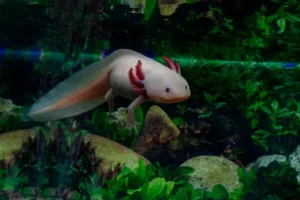
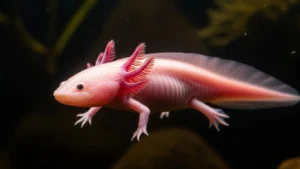
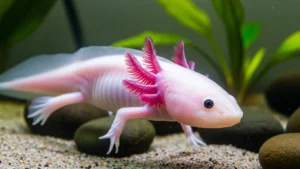
- Leucistic (pink with black eyes)
- Golden Albino (yellow-gold)
- White Albino (pure white)
- Melanoid (solid black)
- Copper (light brown/tan)
But there are tons of variations, mixes, and weird new colors popping up all the time.
Some colors happen naturally in the wild. Others only exist because breeders mixed different genes together.

The Common Colors (Easy To Find)
These are the colors you’ll see at most pet stores and from online breeders.
1. Leucistic (The Pink One)
This is what most people picture when they think “axolotl.” Pink body, fluffy pink gills, black or dark blue eyes.
The difference between leucistic and albino? The eyes. Leucistic has black eyes. Albino has red eyes.
This is the classic pet store axolotl you see everywhere.
My first axolotl was leucistic. Her name was Peach and she lived 11 years. Great starter color.
2. Wild Type (The Brown One)
Wild type looks like the axolotls that used to live in Mexican lakes back when they still existed in nature.
Dark greenish brown with black speckles and gold flecks all over. Purple or grey gills. Dark eyes with a gold ring around the pupil.
These guys are everywhere. Super common.
Wild types get darker or lighter depending on what you put in their tank. I had one that turned almost black when I used dark gravel.
3. Golden Albino (The Yellow One)
These start out white as babies, then turn golden yellow as they grow up.
Light tan to bright gold body with sparkly gold flecks. Red or pink eyes (that’s how you know it’s albino). Pink gills.
You’ll find these pretty easily.
Golden albinos hate bright lights because of those red eyes. Keep their tank away from windows.
4. Melanoid (The Black One)
Solid black or very dark grey/green. No shiny flecks or gold specks just pure dark color.
Dark purple or black gills. Zero sparkle.
These are common too. I love how sleek they look.
Melanoids can change shades a bit to match their tank. Mine got lighter when I switched to sand.
5. White Albino (The Pure White One)
Pure white or very pale pink. Red eyes. Pink gills.
Looks similar to leucistic but with red eyes instead of black.
You can find these without too much trouble.
White albinos are even MORE sensitive to light than golden albinos. They squint a lot in bright tanks.

The Less Common Colors (Harder To Find)
These morphs exist but you won’t see them in every pet store. You might need to hunt down a specialty breeder.
6. Copper
Light brown or tan color with a coppery shine. Pink skin with brown spots. Light colored eyes with a red tint.
They look like someone mixed leucistic with wild type but made it really pretty.
More common in Australia and Germany. Hard to find in the US.
I’ve been trying to get a copper for years. They’re beautiful but nobody near me breeds them.
7. Dirty Leucistic (Speckled)
Starts as a regular leucistic but grows dark freckles as it gets older. Black, brown, or green speckles on the head, back, and tail.
Every dirty leucistic looks different. Some have just a few freckles. Others are covered in spots.
The freckles change as they age. My friend’s dirty lucy went from barely spotted to super spotted over 2 years.
8. Lavender (Silver Dalmatian)
Light purple or silver grey body with dark grey or black spots like a Dalmatian dog.
This color is pretty new. Some “lavenders” actually turn dark when they grow up, so it’s kinda unpredictable.
I’ve only seen these online. Never in person.
The Rare Colors (Good Luck Finding These)
These morphs are super rare. You might never see one unless you know a serious breeder.
9. Piebald
White or pink body with thick black patches down the back and sides. Way darker and heavier patches than a dirty leucistic.
The black goes all the way down the sides, not just spots on top.
True piebalds are hard to tell apart from heavily spotted leucistics. Lots of people get confused.
10. Mosaic
This one is crazy. Mosaic axolotls have random patches of totally different colors mixed together white, black, and gold all splotched on the same body.
They happen when two eggs accidentally fuse together when they’re developing. You can’t breed for this on purpose. It’s pure genetic luck.
I’ve never seen one in real life. Only photos online.
11. Chimera
Even rarer than mosaic. A chimera is split right down the middle one half is one color, the other half is completely different.
Like someone drew a line down the middle and painted each side a different color.
These are SO rare that most are kept by breeders or research labs. They almost never get sold.
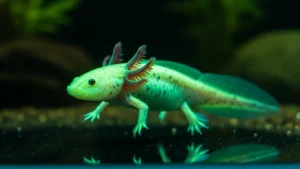
Special Trait: GFP (Glows Under Blacklight)
GFP isn’t actually a color it’s a gene that can be added to ANY color.
GFP stands for Green Fluorescent Protein. It’s a genetic thing from lab research that got mixed into pet axolotls.
What it does: Makes the axolotl glow bright green under UV light or blacklight.
How it looks: Under normal light, they look totally normal. Turn on a blacklight and they light up like a glow stick.
Any morph can be GFP. You can get GFP leucistic, GFP wild type, GFP golden albino, whatever.
I have a GFP leucistic. Under my tank’s blue moonlight, she glows like she’s radioactive. It’s so cool.
How Axolotl Colors Actually Work
Colors come from three types of cells in their skin:
Melanophores: Make black and brown Xanthophores: Make yellow and gold Iridophores: Make shiny, sparkly reflections
Different morphs have different mixes of these:
- Wild type = has all three
- Leucistic = no black cells, keeps the others
- Albino = no black cells, yellows turn golden
- Melanoid = tons of black cells, no sparkle cells
Breeders mix genetics to create new colors. That’s how we got coppers, lavenders, and all the weird stuff.
Which Color Should You Get?
Honestly? Get whatever color you like looking at.
But here’s some real talk:
Best for beginners: Wild type or leucistic. Common, easy to find, tough.
Most photogenic: Leucistic or golden albino. They look amazing in photos.
Most unique: Dirty leucistic or copper. Each one looks totally different.
Easiest to take care of: Wild type or melanoid. Not as bothered by light.
Needs more careful lighting: Any albino (white or golden). Those red eyes are super sensitive.
Don’t go crazy chasing rare colors if you’re new to axolotls. A regular wild type is just as fun as some fancy rare morph.
Do Colors Affect Personality?
Nope. Color is literally just skin deep.
I’ve had chill wild types and grumpy leucistics. Hyper melanoids and lazy albinos.
Color doesn’t change how they act, how fast they grow, or how long they live.
Pick the color YOU like. The axolotl doesn’t give a crap what color it is.
Can Axolotls Change Color?
Yeah, a little bit.
Wild types, melanoids, and some others can lighten or darken a bit based on:
- What color substrate you use (they try to match it)
- How bright the lights are
- If they’re stressed
- Age
But a leucistic won’t turn into a melanoid. The basic color stays the same.
My melanoid went from solid black to dark green when I switched from black sand to light sand. Then back to black when I switched back.
It’s subtle though. Not like dramatic color changes.
Rarest Axolotl Color Right Now
Probably chimera or true mosaic.
These happen by genetic accidents when eggs are forming. You can’t breed for them reliably.
Some people claim to have bred “firefly” morphs (wild type head, leucistic body) but those might just be weird mosaics.
New colors pop up sometimes from random mutations. Who knows what’ll show up next year?
Why Some Colors Are Harder To Find
Common colors (wild, leucistic):
- Easy to breed
- Tons of breeders have them
- You’ll find them everywhere
Less common colors (copper, dirty lucy):
- Harder genetics to get right
- Fewer breeders mess with them
- You gotta hunt for them
Rare colors (piebald, mosaic):
- Super hard to produce
- Genetic lottery ticket
- Almost impossible to find
Some breeders hype up colors as “ultra rare” when they’re not. Do your research before you believe the hype.
My Personal Ranking
I’ve kept a bunch of colors over the years. Here’s my favorite to least favorite just based on looks:
- Copper – Gorgeous and you don’t see them much
- Dirty leucistic – Love the freckles
- GFP golden albino – Glowing gold is sick
- Wild type – Classic natural look
- Melanoid – Sleek and elegant
- Leucistic – Pretty but kinda basic at this point
- White albino – Too pale for me
But that’s just my opinion. You might love white albinos. Get what makes you happy.
Questions People Ask
What’s the most popular axolotl color?
Leucistic (pink with black eyes). It’s the classic look everyone knows.
Do axolotl colors fade over time?
No, but they can lighten or darken a bit based on their tank setup.
What decides what color an axolotl is?
Genetics and pigment cells in their skin.
Can you breed for specific colors?
Yes for most morphs. No for accidents like mosaic or chimera those are pure luck.
What’s GFP? Green Fluorescent Protein makes axolotls glow green under blacklight. Can be added to any base color.
Are rare colors healthier than common ones?
No. Color doesn’t affect health at all. Albinos might need dimmer lighting but that’s it.
Why do some leucistics have freckles?
They’re called “dirty” leucistics. The freckles show up as they get older when more pigment cells develop.
Do different colors need different care?
Not really. Albinos should have less bright lights. Otherwise all colors need the same exact care.
Can axolotls be more than one color?
Yes mosaics and chimeras have multiple colors. These are genetic accidents and super rare.
What color are wild axolotls?
Wild type dark greenish brown with gold flecks. But there are barely any left in the wild anymore.
Administrator
Abdul Wasay is the founder and lead author of Axolotl Portal, a trusted site for axolotl care. He spent almost nine months learning about axolotls, including their tanks, feeding, water care, and common health problems. His knowledge comes from trusted vets, research, and real experience from long term axolotl owners. All Posts by
Related Guides
Can Two Axolotls Live Together Safely?
Abdul Wasay Khatri
Do Axolotls Live In Freshwater or Saltwater? The Complete Answer (2026)
Abdul Wasay Khatri
Can Axolotls Live With Fish?
Abdul Wasay Khatri
Where Do Axolotls Come From?
Abdul Wasay Khatri
Emergency Axolotl Care: What to Do in Critical Situations
Abdul Wasay Khatri
Can Axolotls Live with Turtles?
Abdul Wasay Khatri
350+ Cute Axolotl Names for Your Adorable Water Pet (2026 Guide)
Abdul Wasay Khatri
Can Two Axolotls Live Together?
Abdul Wasay Khatri
Is an Axolotl a Salamander? The Surprising Truth
Abdul Wasay Khatri
How Do You Spell Axolotl? (Plus Why It’s So Tricky!)
Abdul Wasay Khatri