
Do Axolotls Have Superpowers? The Science Behind Their Incredible Abilities

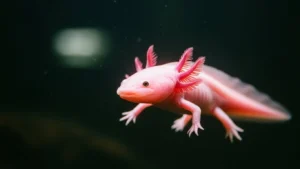
If you’ve spent any time reading about axolotls, you’ve probably seen them called “superheroes of the animal kingdom” or creatures with “regeneration superpowers.” But is this just internet hype, or can these pink, smiling salamanders actually do things that seem impossible?
The answer might surprise you: axolotls possess biological abilities that are genuinely extraordinary, even by scientific standards. Let’s break down what they can actually do and why researchers around the world are studying them.

The Regeneration Ability That Defies Logic
Here’s what sets axolotls apart from nearly every other creature on Earth: they can regrow entire body parts with perfect precision.
We’re not talking about small stuff like fingernails or skin. Axolotls can regenerate:
- Complete limbs including bones, muscles, nerves, and blood vessels
- Portions of their heart tissue
- Parts of their brain and spinal cord
- Damaged eyes including the lens and retina
- Portions of their lungs
- Large sections of their jaw
What makes this truly remarkable is the quality of regeneration. When an axolotl regrows a leg, it’s not a deformed stump or scar tissue. It’s a fully functional limb with proper bone structure, working joints, and complete nerve connections. The regenerated part is virtually identical to the original.
A single axolotl can regenerate the same limb multiple times throughout its life without any degradation in quality. Think about that for a moment most animals can barely heal a deep cut without leaving a scar.
How Does This “Superpower” Actually Work?
The science behind axolotl regeneration is complex, but here’s the simplified version that matters:
When an axolotl loses a limb, specialized cells rush to the injury site and form something called a blastema. This blastema is essentially a cluster of stem cells that can transform into whatever tissue is needed bone, muscle, skin, nerves, you name it.
What’s fascinating is that these cells somehow “remember” what needs to be rebuilt. The blastema receives signals from surrounding tissue and uses that information like a blueprint to reconstruct the missing part exactly as it was.
The entire process takes weeks to months depending on the size of the injury, but the result is always the same: perfect regeneration.
Why Scientists Are Obsessed With Axolotls
Axolotls aren’t just cool pets they’re medical research rockstars. Scientists have been studying them intensively for over 150 years, and for good reason.
Understanding how axolotls regenerate could revolutionize human medicine. Imagine if we could help people regrow damaged heart tissue after a heart attack, or repair spinal cord injuries that currently leave patients paralyzed. That’s not science fiction it’s the potential locked inside axolotl DNA.
Researchers have already identified several genes that control regeneration in axolotls. The challenge now is figuring out how to activate similar pathways in mammals, including humans. We have many of the same genes, but they’re turned “off” in adults.
Other Remarkable Abilities Beyond Regeneration
While regeneration gets all the attention, axolotls have other impressive traits worth mentioning:
Resistance to cancer: Despite their constant cell division during regeneration, axolotls rarely develop tumors. Scientists are studying this to understand how they avoid the cancer risk that normally comes with rapid cell growth.
Metabolic flexibility: Axolotls can adjust their metabolism based on food availability and temperature, allowing them to survive in changing environments better than many amphibians.
Suspended development: Axolotls remain in their larval stage their entire lives through a process called neoteny. They can technically transform into land-dwelling salamanders if given certain hormones, but this shortens their lifespan and is rarely done.
Immune system resilience: When axolotls undergo regeneration, they manage to rebuild tissue without triggering excessive inflammation or immune responses that would normally interfere with healing.
The Limits of Their Powers
Before you start thinking axolotls are invincible, let’s be clear about what they can’t do:
They can’t regenerate from any injury. Severe damage to vital organs can still kill them. They’re also vulnerable to poor water quality, stress, and disease just like any other animal.
Their regeneration isn’t instant. Depending on the injury, full regeneration can take anywhere from a few weeks to several months.
They can’t regrow indefinitely. While they can regenerate the same limb multiple times, there are limits, and very old axolotls show reduced regenerative capacity.
What This Means For You
If you own an axolotl or are thinking about getting one, understanding their regenerative abilities has practical implications:
Don’t rely on it: Just because your axolotl can regenerate doesn’t mean injuries aren’t serious. Always maintain proper tank conditions and handle them carefully to prevent damage in the first place.
Give them time: If your axolotl does suffer an injury, the best thing you can do is maintain excellent water quality and proper nutrition while their body does the work. The process can’t be rushed.
Watch for infections: While regenerating, axolotls are vulnerable to bacterial and fungal infections at the injury site. Keep water parameters pristine during healing.
Minimize stress: Stress hormones can slow down regeneration. Provide hiding spots and maintain a calm environment.
The Bottom Line
Do axolotls have superpowers? By any reasonable scientific definition, yes they absolutely do.
Their ability to regenerate complex structures with perfect fidelity is something that the vast majority of animals on Earth cannot do. The fact that this seems normal for axolotls doesn’t make it any less extraordinary.
What we call “superpowers” are really just evolutionary adaptations that happen to be incredibly useful. Axolotls developed regeneration over millions of years as a survival mechanism. For them, it’s just another Tuesday.
But from a human perspective especially in the context of medical research and our understanding of what’s biologically possible axolotls are living proof that nature can do things we’re only beginning to understand.
So the next time someone tells you axolotls have superpowers, you can confidently say: yes, they do. And here’s exactly why.
Administrator
Abdul Wasay is the founder and lead author of Axolotl Portal, a trusted site for axolotl care. He spent almost nine months learning about axolotls, including their tanks, feeding, water care, and common health problems. His knowledge comes from trusted vets, research, and real experience from long term axolotl owners. All Posts by
Related Guides
Axolotl Squishmallow Names: The Complete Guide
Abdul Wasay Khatri

Can Two Axolotls Live Together?
Abdul Wasay Khatri
Can Axolotls Live with Goldfish?
Abdul Wasay Khatri
Are Axolotls Legal In California? Here’s The Truth (2026)
Abdul Wasay Khatri
Is an Axolotl a Salamander? The Surprising Truth
Abdul Wasay Khatri
Are Axolotls Dangerous? The Simple Truth (Even A Kid Can Understand This)
Abdul Wasay Khatri
Can Axolotls Have Rocks in Their Tank?
Abdul Wasay Khatri
Do Axolotls Need Light?
Abdul Wasay Khatri
Why Did Bill Cipher Say “Axolotl”? Decoding Gravity Falls’ Cryptic Final Message
Abdul Wasay Khatri
How Do You Spell Axolotl? (Plus Why It’s So Tricky!)
Abdul Wasay Khatri