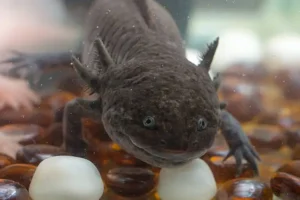
Can You Hold an Axolotl?

You can hold an axolotl briefly, but it’s not recommended for regular handling. Their skin is extremely delicate and sensitive to oils, bacteria, and temperature from human hands. If you must hold one, wet your hands thoroughly with cool tank water first and support their entire body gently. Keep handling under 30 seconds and only when absolutely necessary, like during tank cleaning or health checks.

Understanding Their Fragile Bodies
Axolotls have a protective slime coating on their skin that’s easily damaged by dry hands. This coating acts like armor against bacteria and infections in the water. When you touch them with dry or warm hands, you strip away this layer and leave them vulnerable to disease.
Their skin also absorbs everything it touches. Soaps, lotions, hand sanitizer, or even natural oils from your skin can poison them. These substances soak directly into their bloodstream through their permeable skin within seconds of contact.
Temperature shock is another serious concern. Human hands typically sit around 98°F while axolotls thrive in water between 60-64°F. That 30+ degree difference feels like burning heat to them. Imagine jumping from an ice bath into a hot tub—that’s the shock they experience.
Their bones are surprisingly soft and their limbs regenerate because they’re not rock-solid like ours. Squeezing too hard or gripping incorrectly can cause fractures or internal injuries. Even gentle pressure in the wrong spot damages organs.
Some axolotls seem calm when held, but that’s usually a freeze response from fear rather than enjoyment. They’re prey animals who naturally go still when grabbed, hoping the threat will pass.
The Right Way to Handle When Needed
Start by wetting both hands completely in their tank water. Scoop water over your hands and forearms for at least 30 seconds to match their environment’s temperature. Cold tap water works in emergencies but tank water is always better.
Slide one hand under their belly from the front, supporting the chest area. Your other hand goes under their back legs and tail. Never grab them from above or pinch any body part. Think of cradling them like you’d hold water in your palms.
Keep them horizontal and close to the water surface. Don’t lift them high in the air where a fall could cause serious injury. The shorter the distance between your hands and the tank, the safer they are.
Move slowly and steadily. Quick movements startle them and cause thrashing that can lead to self-injury. Take your time transferring them to a temporary container or back into their tank.
Limit handling to genuine necessities like moving them during deep tank cleanings or examining injuries closely. Casual petting sessions do more harm than good no matter how gentle you think you’re being.
Handling Safety Questions
How often can I safely hold my axolotl?
Only when medically necessary or during tank maintenance. Once a month maximum is reasonable for routine checks.
What happens if I touch them with dry hands?
Their slime coat gets damaged immediately, leaving them open to bacterial infections and fungal growth.
Can children hold axolotls?
Not recommended. Kids have trouble understanding how delicate these pets are and may squeeze or drop them accidentally.
Do axolotls like being pet?
No. They lack the brain capacity to enjoy physical affection and only tolerate touch out of fear.
What should I do if my axolotl jumps out of my hands?
Get them back in water immediately. Watch for injuries over the next few days and test water quality.
Administrator
Abdul Wasay is the founder and lead author of Axolotl Portal, a trusted site for axolotl care. He spent almost nine months learning about axolotls, including their tanks, feeding, water care, and common health problems. His knowledge comes from trusted vets, research, and real experience from long term axolotl owners. All Posts by
Related Guides
How to Care for Axolotls: Complete Guide for Beginners (2026)
Abdul Wasay Khatri
Best Axolotl Hides: Complete Guide to Hideouts, Caves, and Shelters
Abdul Wasay Khatri

Axolotl Life Cycle: The Complete Guide to Every Stage
Abdul Wasay Khatri
Best Axolotl Substrate: Complete Guide to Safe Tank Bottoms
Abdul Wasay Khatri