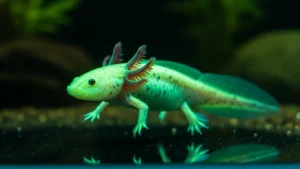
Can Axolotls Survive Outside Water? The Critical Facts You Need to Know

Last year, I found one of my axolotls outside her tank after jumping during feeding time. My heart stopped. She’d been on the floor for maybe two minutes. After five years keeping these animals, I know exactly how dangerous this situation is. Let me explain why axolotls absolutely need water to survive.

The Direct Answer
No, axolotls cannot survive outside water for more than a few minutes. They’re fully aquatic creatures that breathe primarily through their external gills. Without water, they suffocate, their skin dries out, and they die quickly.
These aren’t frogs that can hop between water and land. Axolotls are permanently aquatic salamanders that must remain submerged their entire lives.
Why Axolotls Need Constant Water Submersion
Breathing requirements make water essential. Axolotls breathe through three methods: external gills (primary), skin absorption (secondary), and occasionally gulping air at the surface (minimal). All three methods require moisture or direct water contact.
Their feathery gills extract oxygen from water. In air, these gills collapse and stick together, becoming useless. The delicate gill filaments dry out within minutes when exposed.
Skin respiration works only when wet. Axolotl skin is incredibly thin and permeable, allowing oxygen absorption directly from water. Dry air causes immediate moisture loss through this thin skin.
Body structure isn’t designed for land. Their legs are weak and can’t support body weight properly outside water. The skeleton and muscles evolved for aquatic movement, not terrestrial locomotion.
Temperature regulation depends on water. Axolotls are cold-blooded and rely on surrounding water to maintain proper body temperature. Air temperature fluctuations can cause fatal thermal shock.
How Long Can They Last Out of Water
Based on my experience and veterinary consultations, here’s the reality:
0-2 minutes: Immediate stress but likely no permanent damage if returned to proper water quickly. The axolotl will be frightened and breathing rapidly.
2-5 minutes: Serious danger zone. Gill damage begins. Skin starts drying. Stress hormones spike dangerously high. Survival depends on immediate rescue.
5-10 minutes: Critical condition. Gill tissue is severely compromised. Skin has dried in patches. Oxygen deprivation affects organs. Survival chances drop dramatically.
Beyond 10 minutes: Usually fatal. Even if the axolotl appears alive when returned to water, internal damage often proves too severe. Death may occur hours or days later.
I’ve rescued my axolotl within two minutes, and she recovered fully. But every second counts. The longer they’re out, the worse the outcome.
What Happens During Air Exposure
The physical changes happen frighteningly fast. I’ve observed these stages:
First 30 seconds: The axolotl realizes something is wrong. Gills flatten against the head. Body tenses. Mouth opens and closes rapidly trying to breathe.
30-60 seconds: Skin loses its glossy, wet appearance. Mucus coating begins drying. Gills start sticking together. The axolotl may thrash if it has energy.
1-3 minutes: Visible skin drying and color changes. The body appears dull instead of shiny. Gill filaments clump together. Movement becomes sluggish as oxygen levels drop.
3-5 minutes: Severe distress. Skin looks chalky or whitish in patches. Gills are completely collapsed. The axolotl may stop moving, conserving remaining oxygen.
Beyond 5 minutes: Critical failure. Skin cracks in places. Internal organs begin shutting down from oxygen deprivation. Recovery becomes unlikely.
Emergency Response If Your Axolotl Escapes
Act immediately if you find your axolotl out of water. Speed is everything.
Step 1: Pick up the axolotl gently using wet hands. Don’t panic and drop it. Support the entire body.
Step 2: Place it immediately in cool, clean, dechlorinated water. Use water from the main tank if possible familiar parameters reduce shock.
Step 3: Add an air stone to increase oxygen levels. The axolotl needs extra oxygen to recover.
Step 4: Keep the tank dim and quiet. Reduce stress as much as possible during recovery.
Step 5: Watch closely for 24-48 hours. Monitor breathing, gill appearance, appetite, and movement. Signs of trouble may appear hours later.
Step 6: Don’t feed for the first day. Let the axolotl stabilize before introducing food.
I’ve followed this protocol successfully, but outcomes vary based on exposure time.
Comparing to Other Amphibians
People sometimes confuse axolotls with other amphibians that can survive on land. This confusion is dangerous.
Frogs and toads undergo metamorphosis and develop lungs for air breathing. Adult frogs live on land with occasional water visits. Axolotls never develop this capability.
Newts and salamanders that metamorphose can breathe air and survive on land. They have lungs and skin adapted for terrestrial life. Axolotls don’t metamorphose naturally and lack these adaptations.
Tiger salamanders are close relatives that do transform and move to land. People see this and assume axolotls can too. They can’t. Axolotls remain aquatic permanently.
Understanding these differences is crucial. What works for frogs or adult salamanders will kill an axolotl.
Preventing Accidental Escapes
Prevention beats emergency response every time. I’ve learned these lessons through five years of experience:
Secure tank lids are essential. Axolotls jump, especially during feeding. A mesh lid or glass cover prevents escapes.
Maintain proper water levels. Keep water at least 3-4 inches below the tank rim. This makes jumping out much harder.
Remove climbing structures near tank edges. Decorations that reach near the surface become launching pads.
Watch during feeding. This is prime escape time. Axolotls get excited and jump toward food. Feed carefully and stay present.
Check daily for escapees. If an axolotl goes missing, search immediately. Every minute matters.
Secure pump and filter openings. Axolotls can get stuck in equipment and end up partially exposed.
Signs of Damage After Water Exposure
Even brief air exposure can cause problems. Watch for these warning signs:
Gill damage appears as whitish tips, reduced fluffiness, or parts falling off. Gills should be bright red and feathery.
Skin problems include patches that look damaged, increased slime production, or persistent paleness.
Breathing difficulties show as rapid gill movement, frequent surface gulping, or gasping behavior.
Lethargy and appetite loss suggest internal stress or organ damage from oxygen deprivation.
Infection can develop from skin damage. Watch for fungus, redness, or unusual spots.
Contact an exotic vet experienced with axolotls if problems appear after exposure.
The Metamorphosis Exception
Rarely, axolotls undergo metamorphosis and develop lungs. This happens under extreme stress or with hormonal intervention. Even metamorphosed axolotls need constant moisture and rarely survive long-term.
Forced metamorphosis is considered cruel and significantly shortens lifespan. These transformed axolotls aren’t truly adapted for land life despite having lungs.
Never attempt to force metamorphosis. It causes suffering and almost always ends badly.
Why Water Quality Matters Even More
Since axolotls can’t leave water, they’re completely dependent on water quality for survival. Poor conditions cause stress but they have nowhere to escape.
I maintain pristine water because my axolotls literally can’t survive anywhere else. Weekly water changes, constant parameter testing, and proper filtration aren’t optional they’re life support.
Final Thoughts
Can axolotls survive outside water? Absolutely not for any meaningful time. These are obligate aquatic animals that require constant submersion. Even brief exposure causes serious harm or death.
After five years, I’ve learned that treating axolotls as fully aquatic fish rather than amphibians keeps them safe. They’re not frogs. They can’t breathe air. They need water every single moment of their lives.
Respect this requirement, secure your tank properly, and your axolotl will thrive in its aquatic home.
Frequently Asked Questions
Q: Can axolotls breathe air at the surface?
They occasionally gulp air as a supplement, but this doesn’t sustain them. Their primary breathing happens through gills and skin in water. Air gulping alone cannot keep them alive outside water.
Q: What if my axolotl jumps out overnight?
Sadly, overnight exposure is almost always fatal. By morning, the skin and gills are too damaged. This is why secure lids are absolutely essential prevention is the only reliable protection.
Q: Can I take my axolotl out for photos?
No. Even 30 seconds for photos causes stress and begins the drying process. Take photos through the tank glass instead. Your axolotl’s safety is more important than pictures.
Q: Do axolotls ever naturally leave water?
Never. Unlike other amphibians, healthy axolotls don’t venture onto land. If yours is trying to escape, something is wrong with water conditions, temperature, or health.
Q: Can metamorphosed axolotls live on land?
Barely, and not for long. Even with lungs, they need constant moisture and humidity. Forced metamorphosis is harmful and drastically reduces lifespan. Don’t attempt it.
Q: How do I know if my axolotl is damaged from air exposure?
Watch for damaged gills (white tips, reduced fluffiness), skin problems, rapid breathing, lethargy, and appetite loss. These signs may appear hours after the incident. Contact an exotic vet immediately if symptoms develop.
Administrator
Abdul Wasay is the founder and lead author of Axolotl Portal, a trusted site for axolotl care. He spent almost nine months learning about axolotls, including their tanks, feeding, water care, and common health problems. His knowledge comes from trusted vets, research, and real experience from long term axolotl owners. All Posts by
Related Guides
How Can I Tell If My Axolotl Is A Boy or A Girl? The Real Answer From 8 Years of Experience
Abdul Wasay Khatri
What Do Axolotls Eat? Complete Feeding Guide (2026 Update)
Abdul Wasay Khatri
Can Axolotls Live in Gravel?
Abdul Wasay Khatri
What Substrate is Safe for Axolotls?
Abdul Wasay Khatri
How to Care for Axolotl Eggs: A Complete Hatching Guide
Abdul Wasay Khatri
Do Axolotls Bite? The Honest Truth About Their Behavior
Abdul Wasay Khatri
Do Axolotls Need a Filter?
Abdul Wasay Khatri
How Often Do You Feed an Axolotl?
Abdul Wasay Khatri
Are Golden Axolotls Rare? Rarity Levels Compared
Abdul Wasay Khatri
Do Axolotls Have Night Vision? The Surprising Truth About Their Eyes
Abdul Wasay Khatri