
Can Axolotls See in the Dark?

Axolotls have limited vision in darkness and don’t truly “see in the dark” like nocturnal mammals. While they’re nocturnal creatures most active during nighttime hours, their eyes aren’t particularly adapted for low-light vision. Instead, axolotls rely heavily on non-visual senses to navigate and hunt in darkness specifically their lateral line system (detecting water vibrations and pressure changes), chemical receptors (smell and taste), and touch sensitivity. Their eyesight functions best in dim lighting rather than complete darkness, but they navigate effectively at night using their other highly developed sensory systems rather than relying primarily on vision.

How Axolotl Vision Actually Works
To understand axolotl nighttime capabilities, we need to examine both their visual system’s limitations and their remarkable compensatory senses.
Visual System Characteristics
Axolotl eyes are functional but relatively primitive compared to many aquatic predators. Their visual acuity is poor they cannot focus sharply on objects or see fine details clearly. Everything appears somewhat blurry to an axolotl, even under optimal lighting conditions. They can distinguish between light and dark, detect movement and general shapes, and perceive basic color differences, but their vision lacks the resolution needed for detailed observation.
Light sensitivity is moderate. Axolotls don’t possess the specialized adaptations found in true nocturnal animals like cats or owls no tapetum lucidum (reflective layer behind the retina that enhances night vision) or rod-dominated retinas optimized for low-light conditions. Their eyes evolved for dim, murky water environments rather than complete darkness, making them functional in twilight or shadowed conditions but not exceptionally capable in pitch-black settings.
Lack of eyelids creates vulnerability. Because axolotls cannot close their eyes or adjust pupil size significantly, they cannot protect their photosensitive retinas from bright light or optimize for varying light levels. This anatomical limitation makes them uncomfortable under intense illumination and explains their preference for dimly lit environments but it doesn’t enhance dark vision capability.
Superior Non-Visual Sensory Systems
Axolotls compensate for poor eyesight with extraordinary alternative sensory mechanisms that make darkness almost irrelevant to their hunting and navigation success.
The lateral line system is their primary “night vision.” This sophisticated sensory organ consists of specialized cells arranged in lines along both sides of the body, head, and tail. These mechanoreceptors detect minute water movements, pressure changes, and vibrations with remarkable precision. When prey moves nearby even in complete darkness the lateral line instantly informs the axolotl of the disturbance’s location, distance, and direction. This system functions identically whether lights are on or off, making visual input almost unnecessary during hunting.
Chemical sensing provides detailed environmental information. Axolotls possess highly developed olfactory capabilities through chemoreceptors distributed across their skin and concentrated around the mouth and nostrils. They “taste” and “smell” dissolved chemicals in the water, detecting prey scent trails, pheromones from other axolotls, and potential dangers all without requiring any light whatsoever.
Touch receptors supplement navigation. Axolotls have sensitive skin that detects physical contact with objects, substrate, and tank walls, helping them create mental maps of their environment purely through tactile experience during nighttime exploration.
Practical Implications for Axolotl Care
Understanding how axolotls perceive their environment in low-light conditions helps optimize their captive care and tank setup.
Lighting Recommendations
Since axolotls don’t need light to hunt, navigate, or function normally, your lighting choices should prioritize their comfort rather than visibility enhancement.
Minimize or eliminate artificial lighting. Many successful axolotl keepers maintain tanks with no dedicated aquarium lighting at all, relying solely on ambient room light. This approach reduces stress and creates more natural conditions. If you prefer some lighting for viewing purposes, use extremely low-wattage options (5-10 watts maximum) on timers set for just 6-8 hours daily during your primary viewing times.
Create shadowed refuges. Even in dim conditions, provide hiding spots where axolotls can retreat into complete darkness. Caves, plants, and decorations that create fully shaded areas allow them to self-regulate light exposure. Floating plants that diffuse overhead lighting work particularly well.
Observe nighttime activity. If you want to watch your axolotl during its natural active period without disturbing it, use very dim red or blue LED lighting. Axolotls are less sensitive to these wavelengths, allowing you to observe without causing significant stress, though even these should be kept extremely subtle.
Feeding in Low Light
Your axolotl’s feeding success doesn’t depend on seeing its food clearly, which is why they feed successfully regardless of lighting conditions.
Movement triggers feeding response. Wiggling food items (live earthworms, bloodworms) or using feeding tongs to create motion near your axolotl stimulates the lateral line system and initiates strikes sight plays a secondary role. This is why axolotls successfully capture prey in complete darkness or murky water.
Scent attracts attention. Placing food near your axolotl allows chemical signals to reach their receptors, prompting investigation and feeding even when the axolotl cannot see the food source clearly. This explains why thawed frozen foods work well despite not moving the scent disperses through water.
Nighttime feeding is natural. Many keepers find that feeding during evening hours when axolotls are naturally active yields more enthusiastic responses than daytime feeding, regardless of lighting levels.
Quick FAQ
Do I need to turn lights off at night for my axolotl?
Yes, absolutely. Maintaining a consistent day-night cycle with 14-16 hours of darkness helps regulate natural circadian rhythms and reduces stress, even though axolotls don’t need darkness to see or function.
Can my axolotl see me approaching the tank?
They can detect your movement and general shape as you approach, but they’re likely responding more to vibrations from your footsteps (detected through their lateral line) than to visual identification of who you are.
Will my axolotl eat in complete darkness?
Yes, without any difficulty. Their lateral line and chemical senses allow them to locate and capture food successfully in pitch-black conditions lighting is completely unnecessary for feeding.
Should I use moonlight or nighttime lighting?
This is unnecessary and potentially stressful. Axolotls evolved in environments without artificial nighttime lighting and don’t benefit from it. Complete darkness during night hours is ideal.
How do axolotls avoid obstacles in the dark?
They use their lateral line system to detect objects before physically contacting them, combined with tactile sensing when they do touch surfaces, plus memory of their tank layout from repeated exploration.
Administrator
Abdul Wasay is the founder and lead author of Axolotl Portal, a trusted site for axolotl care. He spent almost nine months learning about axolotls, including their tanks, feeding, water care, and common health problems. His knowledge comes from trusted vets, research, and real experience from long term axolotl owners. All Posts by
Related Guides
Why Is My Axolotl Hiding?
Abdul Wasay Khatri
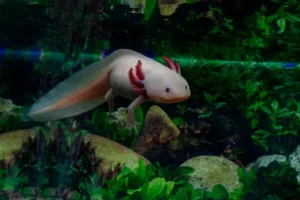
Do Axolotls Have Teeth? What Their Mouth Really Looks Like
Abdul Wasay Khatri
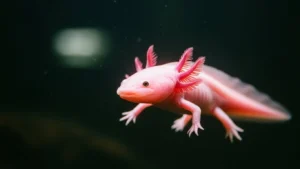
How Do You Know If Your Axolotl Is Dead? The Real Signs (Don’t Panic Yet)
Abdul Wasay Khatri
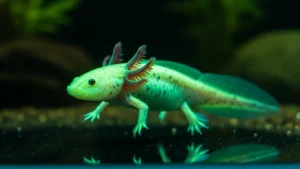
Do Axolotls Play Dead?
Abdul Wasay Khatri
Why Does My Axolotl Yawn?
Abdul Wasay Khatri
Do Axolotls Make Noise?
Abdul Wasay Khatri
Do Axolotls Recognize Their Owners?
Abdul Wasay Khatri
Do Axolotls Sleep? Everything About Axolotl Sleep Patterns and Behavior
Abdul Wasay Khatri
What Does a Healthy Axolotl Look Like? Easy Check Guide
Abdul Wasay Khatri
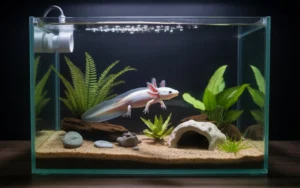
Do Axolotl Bites Hurt? I Let Mine Bite Me To Find Out
Abdul Wasay Khatri