Can Axolotls Live with Turtles?

No, axolotls cannot safely live with turtles. This pairing is extremely dangerous and should never be attempted. Turtles are opportunistic omnivores that will bite, attack, and eat axolotls. Even small turtles can cause severe injuries by nipping at an axolotl’s delicate external gills, limbs, and tail. Additionally, turtles and axolotls have completely different habitat requirements turtles need basking areas and warmer water, while axolotls require fully aquatic, cool environments without any land platforms.

Why This Combination Is Dangerous
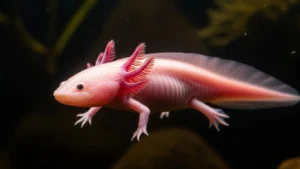
Turtles pose multiple serious threats to axolotls. Their natural feeding behavior includes biting at anything that moves, and axolotls are slow-moving with vulnerable, feathery gills that protrude from their heads. These gills are particularly tempting targets for turtles and can be permanently damaged or bitten off. Even “peaceful” turtle species will investigate and bite at tank mates, especially when hungry.
The size difference doesn’t provide safety either. Small turtles may harass axolotls by repeatedly nipping at them, causing stress and injury. Larger turtles present an even greater danger and may view axolotls as prey items. Turtles have powerful jaws and sharp beaks capable of inflicting fatal wounds on soft-bodied amphibians.
Beyond aggression, turtles are notorious for producing large amounts of waste, which creates high ammonia levels in the water. Axolotls are sensitive to water quality and cannot tolerate the pollution levels that turtles generate. The increased bio-load would require excessive filtration that creates strong currents, which axolotls cannot handle comfortably.
Habitat Incompatibility Issues
The environmental needs of these two species are fundamentally opposed. Axolotls are fully aquatic and must remain underwater continuously. They thrive in water temperatures between 60-64°F (16-18°C) and need low lighting with plenty of hiding spots on the tank bottom.
Turtles, conversely, are semi-aquatic reptiles requiring both swimming areas and dry basking platforms where they can completely exit the water. They need basking temperatures of 85-95°F (29-35°C) under heat lamps and water temperatures around 75-80°F (24-27°C). This temperature requirement alone makes cohabitation impossible water warm enough for turtles is dangerously hot for axolotls and can cause stress, illness, and death.
Turtles also require UVB lighting for proper shell and bone development, while axolotls prefer dim lighting and can become stressed under bright bulbs. These opposing requirements mean you cannot create a habitat that meets both species’ needs simultaneously.
Quick FAQ
What if the turtle is very small?
Size doesn’t matter. Even hatchling turtles will bite at axolotl gills and cause injury. As the turtle grows, the danger only increases.
Can they share a tank with a divider?
Physical separation doesn’t solve the temperature, lighting, or water quality incompatibilities. They should have completely separate tanks.
Are any turtle species safe with axolotls?
No turtle species is safe with axolotls. All turtles bite, and all have incompatible habitat requirements.
What happens if a turtle bites an axolotl’s gills?
Gill damage can be permanent, affecting the axolotl’s ability to breathe and absorb oxygen. Severe bites can be fatal.
What animals can live with axolotls?
Very few species are compatible. Axolotls are best kept alone or only with other similarly-sized axolotls in species-specific tanks.
Administrator
Abdul Wasay is the founder and lead author of Axolotl Portal, a trusted site for axolotl care. He spent almost nine months learning about axolotls, including their tanks, feeding, water care, and common health problems. His knowledge comes from trusted vets, research, and real experience from long term axolotl owners. All Posts by
Related Guides
Can Axolotls Live With Fish?
Abdul Wasay Khatri
Do Axolotls Need a Heater?
Abdul Wasay Khatri
Can Two Axolotls Live Together?
Abdul Wasay Khatri
How Often Do You Feed an Axolotl?
Abdul Wasay Khatri
Can Axolotls Live with Frogs?
Abdul Wasay Khatri
Can Axolotls Live in a Bowl?
Abdul Wasay Khatri
99 Amazing Axolotl Facts For Kids: Meet the Coolest Water Pet Ever!
Abdul Wasay Khatri
Can You Touch an Axolotl?
Abdul Wasay Khatri
Do Axolotls Need Light?
Abdul Wasay Khatri
How Many Axolotl Colors Are There? Every Color Explained (2026)
Abdul Wasay Khatri