Can Axolotls Live on Land? The Truth About Their Aquatic Lifestyle

A customer at my local pet store once asked if axolotls eventually move to land like frogs. The store employee wasn’t sure, which worried me. After five years keeping these salamanders, I know this misconception can be deadly. Let me explain exactly why axolotls must stay in water their entire lives.

The Clear Answer
No, axolotls cannot live on land under any circumstances. They are permanently aquatic animals that will die within minutes if removed from water. Unlike frogs or some salamanders, axolotls never develop the physical adaptations needed for terrestrial life.
This isn’t about preference or training. Their biology makes land survival impossible.
Understanding Axolotl Anatomy
Axolotls are built exclusively for aquatic living. Every aspect of their body structure reflects this specialization.
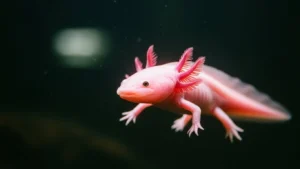
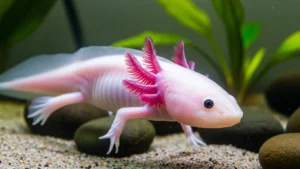
External gills are their primary breathing organs. These feathery structures extract oxygen from water. In air, the gills collapse immediately and stop functioning. They’re delicate and require water flow to work properly.
Skin breathing provides additional oxygen intake. Axolotl skin is thin and permeable, absorbing oxygen directly from surrounding water. On land, this same skin dries out rapidly, losing its ability to function.
Weak legs and soft bones work fine underwater where buoyancy supports their weight. On land, these legs cannot hold up their body mass. They’d collapse under their own weight trying to move.
No protective skin layer means rapid moisture loss. Land animals have thick, waxy, or scaled skin preventing water evaporation. Axolotl skin has no such protection and dries within minutes.
Eye structure evolved for underwater vision. Their eyes lack eyelids and the protective adaptations land animals possess. Exposure to air causes eye damage quickly.
Why Axolotls Stay Aquatic Forever
Most salamanders undergo metamorphosis, transforming from aquatic larvae into terrestrial adults. This process involves developing lungs, losing gills, thickening skin, and strengthening limbs.
Axolotls exhibit neoteny they retain juvenile characteristics throughout life. They reach sexual maturity and can reproduce while still in their larval form. Metamorphosis simply doesn’t happen naturally.
This permanent aquatic state is their evolutionary strategy, not a defect. The lakes where they evolved provided ideal aquatic conditions. There was no survival advantage to moving onto land.
Their closest relative, the tiger salamander, does metamorphose and lives on land as an adult. But axolotls took a different evolutionary path. Comparing them to tiger salamanders or frogs leads to dangerous misunderstandings.
What Happens If Placed on Land
The effects of land exposure are immediate and severe. I’ve seen the aftermath when axolotls accidentally escape tanks.
First minute: Breathing becomes impossible. The gills stick together and can’t extract oxygen. Panic sets in. The axolotl thrashes trying to find water.
Minutes 2-5: Skin begins drying visibly. The normally glossy, wet appearance turns dull. Mucus coating evaporates. Gill tissue starts deteriorating.
Minutes 5-10: Critical oxygen deprivation affects the brain and organs. Skin cracks in places. The axolotl becomes lethargic as systems shut down.
Beyond 10 minutes: Usually fatal even if returned to water. Internal damage is too severe for recovery.
I’ve successfully rescued an axolotl after about 90 seconds of floor time. She recovered fully. But every second matters enormously. Longer exposure almost always ends tragically.
The Metamorphosis Myth
Some people think they can train axolotls to live on land or force metamorphosis. This is both cruel and usually fatal.
Forced metamorphosis through iodine or thyroid hormone injections can make axolotls develop lungs and lose gills. However, these transformed individuals suffer tremendously.
Their lifespan drops from 10-15 years to just 2-5 years. They require constant high humidity and still can’t thrive. Most die within months despite careful care.
Even metamorphosed axolotls aren’t truly terrestrial. They need moisture constantly and can’t survive in normal land conditions. The transformation doesn’t give them the full adaptations that naturally terrestrial salamanders possess.
Attempting this is considered unethical by experienced keepers and herpetologists. There’s no legitimate reason to force metamorphosis.
Proper Habitat Requirements
Since axolotls must stay submerged, their tank setup is critical. I’ve refined my approach over five years of successful keeping.
Water depth should be 6-12 inches minimum. Deeper is fine, but height matters less than floor space for these bottom-dwellers.
Temperature must stay between 60-68°F. Warmer water causes stress and health problems. I use cooling fans or chillers to maintain proper temperature.
Filtration keeps water clean since they can’t leave to escape waste buildup. I perform 25% water changes weekly and test parameters regularly.
No land areas should exist in the tank. Some people create beaches or floating platforms thinking axolotls might want them. They won’t use them and might accidentally strand themselves.
Secure lids prevent jumping during feeding excitement. Even brief air exposure harms them, so escape prevention is essential.
Comparing to Other Amphibians
The confusion about axolotls living on land comes from comparing them to other amphibians incorrectly.
Frogs start as fully aquatic tadpoles, then metamorphose into land-dwelling adults with lungs. This transformation is complete and normal for frogs. Axolotls never undergo this change.
Newts often have aquatic juvenile phases and terrestrial adult phases, returning to water for breeding. Some newts live on land most of the year. Axolotls don’t have this flexibility.
Adult salamanders like fire salamanders or spotted salamanders live primarily on land, needing only moist environments. They have lungs and thick protective skin. Axolotls lack both.
Understanding that axolotls are permanent aquatic specialists, not typical amphibians, prevents deadly care mistakes.
Signs Your Axolotl Needs Better Water Conditions
Since axolotls can’t escape bad conditions by leaving water, they depend entirely on us maintaining proper habitat. Warning signs include:
Rapid gill movement suggests low oxygen or poor water quality Floating or gulping air excessively indicates breathing difficulties Attempting to climb or escape means something is seriously wrong with water parameters Lethargy or refusing food often traces back to unsuitable conditions Pale or damaged gills result from chemical burns or temperature stress
These behaviors don’t mean your axolotl wants land access. They mean the water needs immediate attention.
Why This Matters for Potential Owners
Understanding that axolotls are fully aquatic forever changes what ownership entails. You’re committing to maintaining an aquarium for 10-15 years, not just temporarily housing a creature that will eventually move elsewhere.
This is a significant responsibility. Water quality monitoring, temperature control, filtration maintenance, and regular testing become part of your routine.
If you want a pet that can live in both water and land habitats, axolotls aren’t the right choice. Consider fire-bellied toads, some newt species, or other amphibians that naturally live terrestrially as adults.
The Bottom Line
Can axolotls live on land? No, never, not even briefly. They’re obligate aquatic animals requiring full submersion every moment of their lives.
After five years of hands-on experience, I treat axolotls like fish rather than amphibians. This mindset prevents dangerous assumptions about their capabilities.
Their permanent aquatic nature isn’t a limitation it’s their biological identity. Respect this by providing pristine water conditions and never attempting to transition them to land life.
They’re remarkable creatures perfectly adapted for their underwater world. Keep them there, and they’ll thrive for over a decade.
Frequently Asked Questions
Q: Will my axolotl eventually develop lungs and move to land?
No. Axolotls remain aquatic their entire lives. They keep their external gills and never naturally develop lungs for air breathing. This is permanent, not a life stage.
Q: Can I create a half-water, half-land tank for variety?
Don’t. Axolotls won’t use land areas and might accidentally strand themselves. Use the entire tank for water depth instead, maximizing their usable space.
Q: Do axolotls need any dry time like turtles?
Absolutely not. Unlike turtles that require basking areas, axolotls must stay submerged constantly. Any air exposure causes immediate harm and can be fatal within minutes.
Q: Can metamorphosed axolotls live on land successfully?
Rarely and poorly. Even forced metamorphosis doesn’t create truly terrestrial animals. They need extreme humidity, have drastically shortened lifespans, and usually suffer. Natural axolotls cannot and should not be forced to change.
Q: What if my axolotl climbs to the surface often?
This signals problems with water quality, temperature, or oxygen levels. It’s not seeking land – it’s struggling with poor conditions. Test and correct water parameters immediately.
Q: Are there any salamanders similar to axolotls that can live on land?
Tiger salamanders are close relatives that metamorphose naturally and live on land as adults. However, they’re different species with different care requirements. If you want a terrestrial salamander, research species that naturally live on land rather than trying to change an axolotl.
Administrator
Abdul Wasay is the founder and lead author of Axolotl Portal, a trusted site for axolotl care. He spent almost nine months learning about axolotls, including their tanks, feeding, water care, and common health problems. His knowledge comes from trusted vets, research, and real experience from long term axolotl owners. All Posts by
Related Guides
Do Axolotls Need a Filter?
Abdul Wasay Khatri
What Do Axolotls Eat? Complete Feeding Guide (2026 Update)
Abdul Wasay Khatri
Are Axolotls Endangered? The Shocking Truth (2026 Update)
Abdul Wasay Khatri
Are Axolotls Dangerous? The Simple Truth (Even A Kid Can Understand This)
Abdul Wasay Khatri
What Fish Can Live With Axolotls? The Honest Truth
Abdul Wasay Khatri
Can You Have an Axolotl as a Pet? The Honest Truth from Real Owners
Abdul Wasay Khatri
What Size Tank Does an Axolotl Need?
Abdul Wasay Khatri
Can Two Axolotls Live Together Safely?
Abdul Wasay Khatri
Can Axolotls Live with Frogs?
Abdul Wasay Khatri
Are Golden Axolotls Rare? Rarity Levels Compared
Abdul Wasay Khatri