
Axolotl vs Salamander: What’s the Real Difference?

You just told someone you have an axolotl. They said “oh, like a salamander?” You said “well, kind of…” and then trailed off because you’re not entirely sure what the difference is.
Are they the same thing? Different species? Is an axolotl a type of salamander, or are they completely separate animals?
Let’s settle this once and for all with a real comparison that actually makes sense.

The Simple Truth
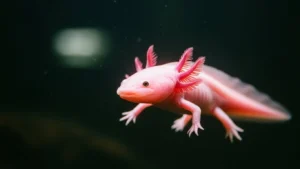
Axolotls ARE salamanders. But they’re salamanders that broke all the rules.
Think of it like this: all golden retrievers are dogs, but not all dogs are golden retrievers. Same deal here all axolotls are salamanders, but not all salamanders are axolotls.
Here’s what that means:
Salamander is the big group. It includes hundreds of different types. Axolotls are one specific type within that group. A weird, rule breaking type that does things completely differently from most other salamanders.
The Head to Head Comparison
Let’s put them side by side so you can see exactly how they’re similar and how they’re wildly different.
| Feature | Typical Salamander | Axolotl |
|---|---|---|
| Where they live as adults | On land or partly on land | Water only, forever |
| Gills as adults | No gills (they lose them) | Keeps gills their whole life |
| Breathing method | Lungs only as adults | Gills + skin + tiny lungs |
| Transformation | Goes through metamorphosis | Never transforms |
| Appearance | Smooth skin, no visible gills | Feathery external gills sticking out |
| Size | Most are 3-7 inches | 9-12 inches when full grown |
| Colors in wild | Browns, blacks, grays | Dark with spots (pink ones are captive-bred only) |
| Eyelids | Has eyelids | No eyelids at all |
| Can live in a fish tank | No, needs land area | Yes, fully aquatic setup works |
| Wild habitat | Forests, near streams | One location: Mexican lakes/canals |
| Regeneration ability | Can regrow some parts | Champions at regrowing everything |
What Happens When a Salamander Grows Up
Here’s where the big difference shows up. Most salamanders go through a total body change when they grow up. Axolotls skip this entirely.
Normal Salamander Lifecycle
Stage 1 – Baby (Larva):
- Lives in water
- Has external gills for breathing
- Has a tail fin
- Looks somewhat like a tadpole with legs
Stage 2 – Transformation (Metamorphosis):
- Loses the external gills
- Develops lungs for breathing air
- Tail fin shrinks or disappears
- Skin texture changes
- Body proportions shift
Stage 3 – Adult:
- Lives on land or splits time between land and water
- Breathes with lungs
- Looks completely different from the baby
- Cannot live underwater permanently
Axolotl Lifecycle (The Rule Breaker)
Stage 1 – Baby (Larva):
- Lives in water
- Has external gills for breathing
- Has a tail fin
- Looks like a tiny version of the adult
Stage 2 – Wait, there is no stage 2:
- Axolotl just stays exactly like this
- Reaches sexual maturity (can breed)
- Never loses the gills
- Never transforms
- Stays looking like a baby forever
Stage 3 – “Adult” (Still Looks Like a Baby):
- Still lives in water only
- Still has external gills
- Still has tail fin
- Looks almost identical to the larva, just bigger
- Can breed and have babies while looking like a baby
This is called neoteny staying in juvenile form permanently while becoming a reproductively mature adult.
Why Axolotls Are So Different
The question everyone asks: why did axolotls decide to skip growing up?
Their Habitat Gave Them Everything
Axolotls originally lived in Lake Xochimilco and Lake Chalco near Mexico City. These lakes had:
- Tons of food available in the water
- Cool temperatures year-round
- Safe hiding spots in underwater plants
- Few predators in the water
Why leave? On land, they’d face:
- New predators they weren’t adapted to fight
- Risk of drying out
- Less available food
- Energy cost of transforming
Evolution’s answer: Don’t transform. Stay aquatic. It worked, so axolotls kept doing it for thousands of generations.
The Transformation Can Still Happen (But Shouldn’t)
Here’s something wild: axolotls CAN transform into land salamanders under extreme conditions.
What triggers it:
- Severe stress
- Certain hormones injected by scientists
- Rapidly dropping water levels
- Horrible living conditions
What happens when they transform:
- Gills shrink and disappear
- Lungs develop more fully
- Eyelids grow in
- Skin changes texture
- They become a terrestrial salamander
Why this is terrible:
- Transformation puts extreme stress on their body
- Most don’t survive the process
- Those that do survive live much shorter lives (1-2 years instead of 10-15)
- They suffer health problems constantly
The takeaway: Just because axolotls CAN transform doesn’t mean they should. They evolved to stay aquatic. Forcing or allowing transformation goes against their biology.
Comparing Common Pet Salamanders
Let’s look at some salamanders people actually keep as pets and see how they stack up against axolotls.
Fire Salamander vs Axolotl
Fire Salamander:
- Lives on land as adult
- Needs a terrarium with land and small water area
- Eats insects like crickets and worms
- Black with bright yellow or orange spots
- 6-8 inches long
- Secretes toxic skin mucus (mild, but there)
Axolotl:
- Lives in water forever
- Needs a full aquarium, no land
- Eats earthworms and aquatic foods
- Wild ones are dark with spots, captive ones come in many colors
- 9-12 inches long
- Skin mucus is not toxic
Bottom line: Fire salamanders need a completely different setup. You can’t house them together.
Tiger Salamander vs Axolotl
This comparison gets interesting because they’re closely related.
Tiger Salamander:
- Transforms from aquatic larva to land-dwelling adult
- Adults live on land, only return to water to breed
- Needs humid terrarium as adult
- 7-14 inches long
- Brown/black with yellow stripes or spots
Axolotl:
- Never transforms, stays aquatic
- Never leaves water
- Needs full aquarium permanently
- 9-12 inches long
- Various colors in captivity
The wild part: Axolotls and tiger salamanders can actually interbreed. They’re THAT closely related. If an axolotl were to transform, it would look almost exactly like a tiger salamander.
Bottom line: Same family, totally different lifestyles. Can’t be housed together.
Newt vs Axolotl
Newts are small salamanders with their own quirks.
Newt:
- Most species split time between water and land
- Go through metamorphosis
- Usually 3-5 inches long
- Some have toxic skin
- Semi-aquatic setup needed (water + land)
Axolotl:
- Water only
- No metamorphosis
- 9-12 inches long
- Non-toxic
- Fully aquatic setup
Bottom line: Different sizes, different needs, don’t mix them.
The Care Comparison
If you’re trying to decide between getting an axolotl or a land salamander, here’s what care looks like for each.
Housing
Typical Land Salamander:
- Needs a terrarium (not aquarium)
- Must have land area with substrate
- Needs humid air but not full water
- Needs hiding spots like logs and rocks
- Temperature around 65-75°F depending on species
Axolotl:
- Needs a full aquarium
- Water only, no land needed
- Water must be 60-64°F (needs chilling in most homes)
- Needs hiding spots but underwater ones
- Filtration system essential
Feeding
Typical Land Salamander:
- Eats live insects (crickets, mealworms, waxworms)
- May eat slugs or earthworms
- Feed 2-3 times per week
- Needs vitamin dusting on food
Axolotl:
- Eats earthworms, bloodworms, axolotl pellets
- No need for live insects
- Feed 2-3 times per week for adults
- No vitamin dusting usually needed
Handling
Typical Land Salamander:
- Minimal handling (they don’t like it)
- Must have wet hands if you touch them
- Some species have toxic skin
- Very delicate, skin damages easily
Axolotl:
- Even less handling than land salamanders
- Must have wet hands
- Non-toxic
- Extremely delicate skin, damages very easily
Neither salamanders nor axolotls are “handling pets.” Both should be mostly left alone.
Lifespan
Typical Land Salamander:
- 5-10 years in captivity depending on species
- Some species live longer with excellent care
Axolotl:
- 10-15 years in captivity with proper care
- Some reach 20 years
Axolotls generally live longer than most commonly kept salamander species.
Complete List of Salamander Names
| Salamander Name | Salamander Name |
|---|---|
| Axolotl | Fire Salamander |
| Tiger Salamander | Spotted Salamander |
| Red Eft | Alpine Salamander |
| Hellbender | Mudpuppy |
| Newt | Marbled Salamander |
| Two-lined Salamander | Slimy Salamander |
| Green Salamander | Cave Salamander |
| Mole Salamander | Dusky Salamander |
| Japanese Giant Salamander | Olm (Rare) |
| Chinese Giant Salamander | Blue-spotted Salamander (Rare) |
| Black Salamander | Eastern Tiger Salamander |
| Jefferson Salamander | Long-toed Salamander |
| Red-backed Salamander | Four-toed Salamander |
| Southern Torrent Salamander | Spring Salamander |
| Black-bellied Salamander | Pacific Giant Salamander |
| Eastern Red-backed Salamander | Ensatina Salamander |
| Northern Slimy Salamander | Black Mountain Salamander |
| Southeastern Slimy Salamander | Idaho Giant Salamander (Rare) |
| Kiamichi Slimy Salamander | Cascade Torrent Salamander |
| Cave-dwelling Salamander | Western Red-backed Salamander |
| Coastal Giant Salamander | White-spotted Salamander |
| Siberian Salamander | Iberian Ribbed Newt |
| Yellow-spotted Salamander | Carolina Sandhills Salamander |
| Golden Salamander | Alabama Waterdog |
| Central Asian Salamander | Mexican Axolotl (Rare) |
| Northern Dusky Salamander | Southern Dusky Salamander |
| Eastern Newt | Crested Newt |
| Fire Belly Newt | Japanese Fire-bellied Newt |
| Smooth Newt | Italian Cave Salamander |
| Olm | Southern Zigzag Salamander |
| Chinese Salamander | Black-spotted Salamander |
| Western Tiger Salamander | Lake Titicaca Water Salamander (Rare) |
The Regeneration Difference
Both salamanders and axolotls can regenerate body parts. But axolotls are the absolute champions.
What Salamanders Can Regenerate
Most salamander species can regrow:
- Tails
- Legs (though not always perfectly)
- Some internal tissues
Limitations:
- Regeneration slows with age
- Not all species regenerate equally well
- Some parts won’t regrow at all
What Axolotls Can Regenerate
Axolotls can regrow:
- Tails (perfectly, multiple times)
- Legs (perfectly, with all bones and muscles)
- Parts of their brain
- Parts of their heart
- Spinal cord tissue
- Eyes (including lens and retina)
- Jaw
- Gills
The difference: Axolotls regenerate more structures, more perfectly, and throughout their entire life. They’re the regeneration champions of the salamander world.
Why scientists care: Research on axolotl regeneration might someday help humans heal from injuries that currently leave permanent damage.
Common Confusion Points Cleared Up
Let’s tackle the questions that trip people up most often.
“Are axolotls baby salamanders?”
No. They LOOK like baby salamanders, but they’re sexually mature adults capable of breeding. They’re adult salamanders that kept their baby appearance.
“Can I make my axolotl transform into a regular salamander?”
Technically yes, through hormones or extreme stress. But this is cruel and will likely kill your axolotl or drastically shorten its life. Never do this.
“Are pink axolotls real salamanders?”
Yes. Color doesn’t change species. Pink (leucistic) axolotls are the same species as wild-type brown ones. Both are real salamanders.
“Can axolotls and salamanders live together?”
No. They have completely different habitat needs. Axolotls need deep water. Land salamanders need land. They’re incompatible as tank mates.
“Which is easier to care for?”
For most people, axolotls are slightly easier because:
- No complicated land/water balance needed
- Feeding is simpler (no hunting live insects)
- Water changes are straightforward
But both require commitment and proper care.
“Are salamanders fish?”
No. Neither salamanders nor axolotls are fish. Both are amphibians. The fact that axolotls live in water doesn’t make them fish it makes them unusual salamanders.
Wild Population Status
This is where the comparison gets sad and important.
Wild Salamanders
Status: Varies widely by species
- Some salamander species are thriving
- Many are endangered due to habitat loss
- Some are critically endangered
- Overall, salamander populations are declining worldwide
Threats:
- Habitat destruction
- Climate change
- Pollution
- Diseases like chytrid fungus
Wild Axolotls
Status: Critically endangered
- Only found in a tiny area of canal systems in Mexico City
- Estimated 50-1,000 individuals remaining in the wild
- May go extinct in the wild within years
Why they’re nearly extinct:
- Habitat almost completely destroyed (lakes drained for Mexico City expansion)
- Severe water pollution
- Invasive fish eating baby axolotls
- Only exist in one tiny location now
Captive Populations
Salamanders in captivity:
- Thousands in zoos, research facilities, and homes
- Captive breeding programs exist for endangered species
- Most pet salamanders are captive-bred
Axolotls in captivity:
- Over 1 million worldwide
- Easy to breed in captivity
- Every pet axolotl is captive-bred (wild collection is illegal)
The irony: Axolotls are nearly extinct in the wild but thriving in captivity. They’re saved by their popularity as pets and research animals.
Which Should You Get?
If you’re choosing between an axolotl and a land salamander, consider these factors.
Get an Axolotl If:
- You want a fully aquatic pet
- You already have aquarium experience
- You can maintain cold water temperatures (60-64°F)
- You want a larger pet (9-12 inches)
- You prefer feeding worms over insects
- You want something that lives 10-15+ years
Get a Land Salamander If:
- You want a terrarium pet
- You prefer watching land behavior
- You like feeding live insects
- You want a smaller pet (most species)
- You prefer a more natural-looking setup with soil and plants
- You’re okay with 5-10 year lifespan
Get Neither If:
- You can’t commit to 10+ years of care
- You want a pet you can handle frequently
- You can’t maintain proper temperature (too warm is deadly)
- You’re not willing to learn about water chemistry or terrarium care
- You want a low-maintenance pet
The Bottom Line
Axolotls are salamanders. Specifically, they’re neotenic salamanders that keep their juvenile aquatic form throughout their entire adult life.
The key differences:
Most salamanders: Transform from water babies to land adults, lose their gills, develop lungs, live on land or partly on land.
Axolotls: Skip transformation, keep their gills forever, stay in water permanently, never go on land.
What they share:
- Both are amphibians
- Both have permeable skin
- Both are carnivores
- Both can regenerate (axolotls do it better)
- Both need careful, specific care
Why it matters:
Understanding that axolotls are unusual salamanders helps you provide proper care. They need aquatic setups like fish, but they’re not fish. They’re amphibians with amphibian needs just amphibians that decided staying in the water forever was the best strategy.
Every salamander is special. Axolotls are just the ones that became famous for being the Peter Pan of the amphibian world they never grew up, and that’s what makes them amazing.
Administrator
Abdul Wasay is the founder and lead author of Axolotl Portal, a trusted site for axolotl care. He spent almost nine months learning about axolotls, including their tanks, feeding, water care, and common health problems. His knowledge comes from trusted vets, research, and real experience from long term axolotl owners. All Posts by
Related Guides
How Can I Tell If My Axolotl Is A Boy or A Girl? The Real Answer From 8 Years of Experience
Abdul Wasay Khatri
Can You Touch an Axolotl?
Abdul Wasay Khatri
Why Does My Axolotl Smile? The Cute Truth Every Owner Should Know
Abdul Wasay Khatri
How Big Do Axolotls Get? Growth Timeline & Size Guide
Abdul Wasay Khatri
Male vs Female Axolotl: Which Is Better? The Complete Comparison
Abdul Wasay Khatri
What Fish Can Live With Axolotls? The Honest Truth
Abdul Wasay Khatri
Are Axolotls Good Pets?
Abdul Wasay Khatri
Why Did Bill Cipher Say “Axolotl”? Decoding Gravity Falls’ Cryptic Final Message
Abdul Wasay Khatri
Can You Have an Axolotl as a Pet? The Honest Truth from Real Owners
Abdul Wasay Khatri
Is an Axolotl a Salamander? The Surprising Truth
Abdul Wasay Khatri