Axolotl Life Cycle: The Complete Guide to Every Stage

You bought an axolotl and expected it to eventually lose its gills and move onto land like a frog does. Months pass. The gills stay. It never leaves the water. You wonder if something’s wrong.
Nothing’s wrong. Your axolotl is doing exactly what nature designed it to do stay a baby forever.
Here’s the complete life cycle of axolotls, why it’s totally different from other amphibians, and what happens at each stage.

The Axolotl Life Cycle in 4 Stages
Unlike frogs that go through dramatic changes, axolotls follow a simpler path that breaks all the normal amphibian rules.
Stage 1: Egg (Day 0-14) Tiny jelly-covered eggs stuck to plants
Stage 2: Larva (Week 2 – Month 6) Baby axolotl with gills, looks like tiny adult
Stage 3: Juvenile (Month 6 – Month 18) Growing bigger, developing colors, still has gills
Stage 4: Adult (Month 18+) Full size, can breed, STILL has gills and stays in water
What’s missing? The transformation stage that most amphibians go through. Axolotls skip it completely.

Stage 1: The Egg (Days 0-14)
Everything starts with hundreds of tiny eggs.
What Axolotl Eggs Look Like
Female axolotls lay between 200 and 1,500 eggs in a single clutch. That’s not a misprint up to 1,500 eggs at once.
Each egg is about the size of a pea, covered in clear jelly. Inside, you can see a tiny dark spot that grows into a baby axolotl.
Where eggs are laid: Females attach eggs individually to plants, decorations, or anything in the tank. They don’t lay them in one clump like frog eggs.
How long until hatching: 10-14 days at proper temperature (around 68°F). Warmer water speeds this up, cooler water slows it down.
What you see developing:
- Days 1-3: Just a dark spot inside jelly
- Days 4-7: Spot elongates, you can see the body forming
- Days 8-10: Tiny gills start appearing
- Days 11-14: Ready to hatch, moving inside the egg
Egg Care Essentials
Remove eggs from the adult tank immediately. Adult axolotls will eat every egg they find.
Keep eggs in clean, cool water. Change 20% of the water daily. Eggs are sensitive to poor water quality.
Remove bad eggs daily. Unfertilized eggs turn white and fuzzy with fungus. Take them out or they’ll contaminate good eggs.
Expect losses. Not every egg hatches. 50-70% hatch rate is normal.
Stage 2: Larva (Weeks 2-24)
The egg hatches and out comes a tiny larva about 0.5 inches long.
What Larval Axolotls Look Like
Week 2-4:
- Transparent or very pale
- External gills just starting to develop
- Eyes are visible but not fully formed
- About 0.5-1 inch long
- Cannot hunt well yet
Week 4-8:
- Gills growing bigger and fluffier
- Legs forming (front legs first, then back legs)
- Colors starting to show
- 1-2 inches long
- Learning to hunt live food
Week 8-16:
- All four legs fully formed
- Gills are prominent and feathery
- Adult coloring becoming clear
- 2-4 inches long
- Good hunters now
Week 16-24:
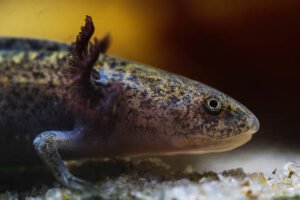
- Looking like miniature adults
- Gills fully developed
- 4-6 inches long
- Eating well and growing fast
What Makes This Stage Different
In most amphibians, the larval stage ends with metamorphosis. The tadpole loses its gills, develops lungs, and moves to land.
Axolotls don’t do this. They keep their gills. They stay in water. The larval features remain as they grow bigger.
This is called neoteny reaching adulthood while keeping baby features.
Larva Stage Care
Food requirements:
- Weeks 2-4: Baby brine shrimp 2-3 times daily
- Weeks 4-8: Blackworms, small bloodworms daily
- Weeks 8-16: Bloodworms, small earthworm pieces daily
- Weeks 16-24: Larger earthworm pieces daily
Tank needs: Start small (10 gallons) and upsize as they grow. Too much space makes hunting difficult for tiny larvae.
Water quality: Perfect parameters required. Ammonia 0, nitrite 0, nitrate under 20. Larvae are extremely sensitive.
Temperature: 60-64°F ideal. Never above 68°F or they stress and grow poorly.
Stage 3: Juvenile (Months 6-18)
The rapid growth phase. Your axolotl transforms from tiny baby to near-adult size.
What Juvenile Axolotls Look Like
Months 6-9:
- 5-7 inches long
- Colors fully developed
- Gills large and healthy
- Body proportions filling out
- Starting to look chubby
Months 9-12:
- 7-9 inches long
- Nearly adult sized
- Sexual characteristics developing
- Males getting swollen cloaca
- Females getting rounder
Months 12-18:
- 8-11 inches long
- Adult size approaching
- Sexually mature
- Can breed (but shouldn’t yet)
- Growth slowing down
The Confusion Point
People see a 12-month-old axolotl with gills and think “when does it lose those?”
It doesn’t. Ever.
The gills stay. The aquatic lifestyle stays. This IS the adult form. There’s no land-dwelling stage coming.
Juvenile Care Requirements
Feeding schedule:
- Months 6-9: Daily feeding
- Months 9-12: Every other day
- Months 12-18: 2-3 times per week
Tank size: Move to adult-sized tank (20+ gallons) by 6 months. They need the space now.
Social housing: Only keep same-sized juveniles together. Size differences lead to nipped limbs and stress.
Stage 4: Adult (18+ Months)
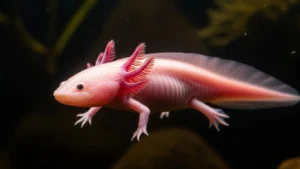
Your axolotl reaches full maturity but STILL looks like a baby salamander.
What Adult Axolotls Look Like
Physical appearance:
- 9-12 inches long (some reach 14 inches)
- Full-sized feathery gills
- Robust, chunky body
- Distinct color morph visible
- Males have swollen cloaca, females are rounder
Behavioral changes:
- Less active than juveniles
- More territorial
- Breeding behaviors appear
- Established routines and habits
The Adult Life
Adults live 10-15 years in captivity with proper care. Some reach 20+ years.
What they do all day:
- Walk along tank bottom
- Hide in caves
- Come out for food
- Occasionally swim laps
- Sometimes gulp air at surface
Still aquatic, still with gills, still looking like babies. This is permanent.
Adult Care
Feeding: 2-3 times per week. Whole earthworms, bloodworms, or quality pellets.
Tank maintenance: 20% water changes weekly. Test parameters regularly.
Breeding: Sexually mature by 18 months but waiting until 24 months is healthier.
The Missing Stage: Why No Metamorphosis?
This is what confuses everyone. Most amphibians go through metamorphosis. Axolotls don’t.
What Metamorphosis Normally Involves
In frogs:
- Tadpole → loses tail
- Develops lungs → loses gills
- Grows legs → moves to land
- Completely different adult form
In most salamanders:
- Aquatic larva → develops lungs
- Loses external gills → skin changes
- Moves to land or semi-aquatic life
- Distinct adult appearance
In axolotls: Nothing happens. They stay exactly as they are.
Why Axolotls Skip Transformation
Genetic reason: Axolotls lack thyroid-stimulating hormone, which is needed for the thyroid to produce thyroxine for metamorphosis. Without this hormone, the transformation never triggers.
Environmental reason: Over time, if staying in the water was better for axolotl survival and they matured sexually before they went through metamorphosis, then it made sense to keep all their water-adapted features.
Evolutionary advantage: Their lake habitat provided everything they needed. Leaving water offered no benefits, so staying aquatic became the winning strategy.
Can Forced Metamorphosis Happen?
Yes, but you should never do it.
What triggers it:
- Iodine injection
- Thyroid hormone treatment
- Extreme environmental stress
What happens:
- Gills shrink and disappear
- Lungs develop fully
- Eyelids grow (axolotls normally have none)
- Body changes to land salamander form
Why this is terrible:
- Most die during the process
- Survivors live 1-2 years instead of 10-15
- Constant health problems
- Loss of regeneration ability
- Extreme stress throughout
The verdict: Never attempt this. Axolotls evolved to stay aquatic. Forcing transformation is cruel and deadly.
Life Cycle Comparison: Axolotl vs Frog
Seeing them side by side shows exactly how different axolotls are.
| Stage | Frog | Axolotl |
|---|---|---|
| Egg | Laid in water, jelly clump | Laid in water, individual eggs on plants |
| Hatches | Tadpole with tail, no legs | Larva with tiny legs, gills |
| Early development | Lives in water, has gills | Lives in water, has gills |
| Metamorphosis | Loses tail and gills, grows legs | SKIPS THIS ENTIRELY |
| Adult form | Lungs, lives on land or both | Keeps gills, stays in water forever |
| Appearance change | Dramatic (tadpole to frog) | Minimal (baby to bigger baby) |
| Breathing | Lungs only | Gills + skin + tiny lungs |
| Habitat | Land or semi-aquatic | Fully aquatic only |
How Long Each Stage Lasts
Understanding the timeline helps you know what to expect.
| Life Stage | Duration | Size Range | Key Features |
|---|---|---|---|
| Egg | 10-14 days | Pea-sized | Jelly-covered, developing embryo |
| Early Larva | 2-8 weeks | 0.5-2 inches | Transparent, tiny gills forming |
| Late Larva | 8-24 weeks | 2-6 inches | All legs present, gills growing |
| Juvenile | 6-18 months | 6-11 inches | Rapid growth, colors developing |
| Adult | 18 months – 15+ years | 9-12 inches | Full size, sexually mature |
Total time to adult size: 18-24 months
Lifespan: 10-15 years (sometimes 20+)
Common Life Cycle Confusion
Let’s clear up the questions that trip up everyone.
“When do the gills fall off?”
They don’t. Ever. The gills are permanent.
If you see an axolotl without gills, either they were ripped off in a fight (they’ll regenerate) or someone forced metamorphosis (which is bad).
“My axolotl is 2 years old and hasn’t transformed. Is something wrong?”
Nothing’s wrong. It’s never going to transform. That’s normal. Axolotls don’t transform unless forced with hormones or extreme stress.
“Will it eventually go on land?”
No. Axolotls are fully aquatic for life. They can survive on land for a short time (minutes to an hour) but it will kill them. They need water.
“Is my axolotl stuck in the baby stage?”
Yes and no. It looks like a baby (gills, aquatic, larval appearance) but it’s a fully mature adult capable of breeding. It’s a baby-looking adult, not an actual baby.
“Can I speed up the life cycle?”
You can’t and shouldn’t try. Warmer water makes them grow faster but also stresses them and shortens their lifespan. Keep proper temperature (60-64°F) and let nature set the pace.
Factors That Affect Life Cycle Development
Several things influence how quickly and well your axolotl develops.
Temperature Impact
Too cold (under 55°F):
- Slowed growth
- Reduced appetite
- Longer time to reach adult size
Ideal (60-64°F):
- Normal growth rate
- Healthy development
- Proper timeline
Too warm (over 68°F):
- Stressed axolotl
- Health problems
- Shortened lifespan
- Growth might be faster but unhealthy
Nutrition Quality
Good feeding:
- Reaches full size potential
- Healthy development
- Strong immune system
- Proper timeline
Poor feeding:
- Stunted growth
- Delayed development
- Smaller adult size
- Health problems
Water Quality
Clean water:
- Normal development
- Healthy growth
- No setbacks
Poor water:
- Illness delays growth
- Stress slows development
- Can cause permanent stunting
Genetics
Some axolotls are genetically programmed to be larger or smaller. Perfect care won’t make a small-genetics axolotl huge, but it helps them reach their potential.
The Regeneration Connection
Axolotl life cycle stages connect directly to their famous regeneration ability.
Regeneration Throughout Life
Larvae: Can regrow limbs in 2-3 weeks
Juveniles: Can regrow limbs in 3-4 weeks
Adults: Can regrow limbs in 6-8 weeks
All stages can regenerate:
- Limbs (legs, feet, toes)
- Tail
- Gills
- Parts of brain, heart, spinal cord
- Eyes (lens and retina)
Why Neoteny Helps Regeneration
The ability may relate to the axolotl’s refusal to go through metamorphosis. In most animals, including people, there are genes that are only active as we’re developing that direct the growth of organs and limbs. Once we reach adulthood, these genes are silenced. But for axolotls, it appears these genes may get activated again when there’s an injury.
Staying in the juvenile form keeps these growth genes accessible. This is why axolotls regenerate better than salamanders that went through metamorphosis.
Frequently Asked Questions
Do all axolotls stay in larval form?
Yes, in their natural healthy state, all axolotls exhibit neoteny and keep larval characteristics throughout life.
Can wild axolotls transform?
Metamorphosis can be induced with thyroid hormone, thyroid stimulating hormone, or stimulation of hypothalamic neurons, but in the wild, axolotls remain neotenic without human intervention.
What triggers the rare natural metamorphosis?
Extreme environmental stress like rapidly dropping water levels, severe pollution, or near-death conditions. This is the body’s desperate attempt to escape terrible water conditions.
How long does each life stage last?
Egg: 10-14 days. Larva: 2-6 months. Juvenile: 6-18 months. Adult: 10-15+ years.
At what age can they breed?
Sexually mature at 6-12 months, but shouldn’t breed until 18-24 months for health reasons.
Do they grow throughout their whole life?
Mostly done growing by 18-24 months, but may continue very slow growth throughout life.
Why does my axolotl gulp air if it has gills?
Axolotl retain larval morphology, but they do develop rudimentary lungs. They depend on the feathery gills for respiration but often come to the surface for a quick gulp of air to fill their lungs.
Can you reverse neoteny?
No. Once an axolotl reaches adulthood in neotenic form, that’s permanent. Forced metamorphosis is artificial and harmful.
Do different color morphs have different life cycles?
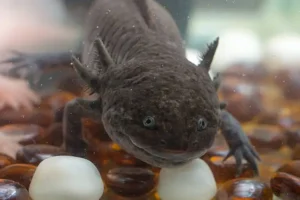
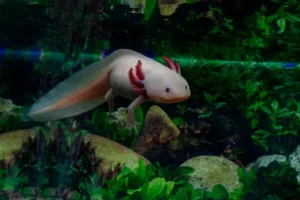
No. Pink, golden, black, wild type all follow the same life cycle and development timeline.
Will captive breeding eventually make them transform?
No. The genes responsible for neoteny in laboratory axolotls may have been identified; they are not linked to the genes of wild populations, suggesting artificial selection is the cause of complete neoteny in laboratory and pet axolotls. Captive breeding actually strengthened neoteny.
Administrator
Abdul Wasay is the founder and lead author of Axolotl Portal, a trusted site for axolotl care. He spent almost nine months learning about axolotls, including their tanks, feeding, water care, and common health problems. His knowledge comes from trusted vets, research, and real experience from long term axolotl owners. All Posts by