Are Blue Axolotls Real? The Truth About Blue Axolotl Colors

I’ve kept axolotls for five years and bred hundreds of them. The question “are blue axolotls real?” comes up constantly, especially after Minecraft introduced their rare blue variant. Let me clear up the confusion between what exists in the game versus what exists in nature.
The Direct Answer
No, naturally blue axolotls do not exist in real life. There is no true blue color morph in actual axolotl genetics. The blue axolotls you see in Minecraft are fictional creations made for the game.
However, the confusion is understandable. Some axolotl colors can appear bluish under certain lighting conditions, and people desperately want blue ones to exist. Let me explain what’s actually possible.

Real Axolotl Colors
After five years working with these salamanders, I’ve seen every legitimate color morph available:
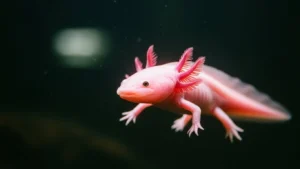
Leucistic (pink/white): Pale pink body with dark eyes. This is the most common pet variety. The pink comes from blood vessels showing through translucent skin.
Wild type: Dark greenish-brown or black with gold speckling. This is how axolotls look in their natural Mexican habitat.
Albino varieties: These come in golden (yellow-orange with pink eyes) and white (pale with red eyes). Both lack the pigment melanin.
Melanoid: Solid black or very dark gray without any gold spots or iridescence. These have excess melanin.
Copper: Brownish-orange coloring with lighter spots. This recessive gene creates warm-toned axolotls.
Chimera and mosaic: Extremely rare patterns where two distinct colors appear on one axolotl, split or mixed.
Notice something? No blue anywhere in this PDF list.
Why People Think Blue Axolotls Exist
Several factors create the blue axolotl myth:
Minecraft influence: The game features rare blue axolotls as prized variants. Millions of players see these and assume they’re based on reality.
Photo filters and editing: Social media is full of digitally altered photos showing “blue” axolotls. These are fake, created with editing software.
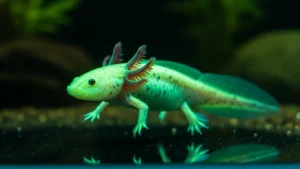
Lighting tricks: Purple or blue aquarium lighting can make gray or lavender axolotls appear bluish. The axolotl isn’t actually blue it’s the light reflecting off them.
Wishful thinking: People love the idea of blue axolotls so much they want to believe they’re real.
Lavender confusion: Some axolotls have grayish purple tones that uninformed sellers market as “blue.”
I’ve seen countless photos of supposed blue axolotls online. Every single one was either edited, a lavender axolotl under blue light, or an outright scam.
The Closest Thing to Blue: Lavender Axolotls
Lavender or silver dalmatian axolotls are the nearest you’ll get to blue coloring:
These axolotls have a grayish-purple base color with darker spots scattered across their body. Under certain lighting, especially LED lights with blue tones, they can appear somewhat bluish.
The coloring comes from specific pigment combinations, not true blue pigmentation. In natural lighting, they look clearly gray or light purple, not blue.
I’ve kept several lavender axolotls. They’re beautiful and unusual, but calling them “blue” is misleading. Under my standard white aquarium lights, they look gray with purple hints.
Real lavender characteristics:
- Pale gray to light purple base
- Dark gray or black spots
- Color appears different under various lighting
- Still clearly gray in natural daylight
Some breeders and sellers intentionally mislabel lavenders as “blue” to charge higher prices. This is dishonest and sets up buyer disappointment.
The Science Behind Axolotl Coloring
Understanding pigment biology explains why blue axolotls don’t exist:
Chromatophores are specialized cells containing pigments. Axolotls have three main types:
Melanophores contain melanin (black/brown pigment). Wild types and melanoids have abundant melanophores.
Xanthophores contain yellow/orange pigments. Golden albinos showcase these prominently.
Iridophores contain reflective crystals creating metallic shine. These produce the sparkly look in some morphs.
True blue coloring in animals requires specific pigment structures or proteins. Some frogs and fish achieve blue through unique cell arrangements or chemical compounds. Axolotls lack the genetic capacity to produce these blue-creating mechanisms.
The blue you see in poison dart frogs or blue tang fish comes from structural coloration or specific blue pigments. Axolotls simply don’t possess these traits in their genetics.
Digital Manipulation and Fake Photos
Social media platforms are flooded with fake blue axolotl images:
Photoshop alterations: Taking a white or gray axolotl photo and shifting the color balance creates convincing “blue” images.
Filters and apps: Instagram and TikTok filters can change colors in real-time, making people think they’re seeing real blue axolotls.
Painted or dyed animals: Some unethical individuals actually paint or dye axolotls blue. This is extremely harmful and often fatal to the animal.
Scam breeding claims: Fraudulent breeders advertise “blue axolotl eggs” or “blue babies” that don’t exist.
I’ve seen heartbreaking stories of people paying hundreds of dollars for “blue” axolotls that arrived as regular leucistics or lavenders. The disappointment and financial loss hurt, but worse is the distrust it creates.
The Minecraft Blue Axolotl
Minecraft’s blue variant is adorable but purely fictional:
In the game, blue axolotls have a 1 in 1200 chance of appearing from breeding. They’re the rarest color and highly sought after by players.
Mojang Studios, Minecraft’s developer, never claimed this color exists in reality. They created five color variants for the game: pink (leucistic), brown (wild), yellow (golden), cyan (creative liberty), and blue (complete fantasy).
The cyan and blue varieties are artistic choices to make the game more interesting. They understood players would want rare, special variants to collect.
I play Minecraft extensively and have bred for blue axolotls in-game. It’s fun virtual content, but I never confused it with my real axolotl keeping.
What Scammers Say
Be aware of these red flags when shopping for axolotls:
“Rare blue axolotl for sale” – If someone advertises true blue axolotls, they’re lying or misinformed.
“Blue axolotl eggs available” – Axolotls don’t lay blue eggs. All eggs look similar regardless of parents’ colors.
Prices way above market – Claiming a color is ultra-rare to justify $500+ prices when it’s actually a $75 lavender.
Only photos under blue lighting – Refusing to show the axolotl under normal white light hides the true color.
“Developed through special breeding” – No breeding program has created blue axolotls. Anyone claiming this is scamming you.
Blurry or heavily filtered images – Low-quality photos hide the fact that the axolotl isn’t actually blue.
I’ve encountered several of these scams while networking in axolotl communities. People lose significant money believing false promises.
Why Blue Pigmentation Is Difficult
Creating blue animals through breeding is extraordinarily complex:
Blue pigmentation is rare in nature. Most “blue” animals achieve the color through structural coloration (microscopic structures reflecting blue light) rather than actual blue pigment.
Introducing true blue coloring into axolotl genetics would require genetic engineering, not traditional breeding. This level of modification isn’t being done for pet axolotls, and if it were, it would be controversial and expensive.
The genes controlling axolotl coloring have been studied for over a century. Researchers map these genetics carefully. Blue simply isn’t in the genetic possibilities based on current science.
Some breeders work on intensifying lavender coloring, hoping to create more purple-toned axolotls. But even if they succeed, the result would be purple, not blue.
Similar Animals That Are Blue
Other creatures do come in blue, making people wonder why axolotls can’t:
Blue poison dart frogs achieve their color through specific alkaloid compounds and structural elements in their skin.
Blue tang fish get their brilliant blue from light-reflecting structures in their scales.
Blue birds like blue jays use microscopic feather structures to scatter light and appear blue.
Blue lobsters are genetic rarities occurring roughly 1 in 2 million, caused by excess production of a specific protein.
Each of these examples involves biological mechanisms that axolotls don’t possess. You can’t just breed for blue in any species the genetic foundation must exist first.
Gray and Purple Axolotls Under Blue Light
This is where most “blue axolotl“ claims originate:
If you place a lavender, gray, or even white axolotl under blue LED lighting, it will reflect blue tones and appear blue to the eye.
Photography under these conditions creates convincing images of blue axolotls. But remove the blue light, and the axolotl’s true color becomes obvious.
Aquarium stores sometimes use colored lighting to make fish and other animals more appealing. This practice, while common, misleads customers about true coloring.
I tested this myself. My lavender axolotl looks genuinely blue under my friend’s blue LED lights. Under my standard white lights, she’s clearly gray-purple. Same animal, totally different appearance.
What to Buy If You Want “Blue”
If you’re drawn to the idea of a blue axolotl, here are your actual options:
Lavender/silver dalmatian axolotls: The closest to blue you’ll find. They have grayish-purple coloring with spots.
Heavily marked leucistics: Some leucistics develop extensive dark spotting, creating a blue-gray appearance, especially under certain lights.
Use blue lighting in your tank: While I don’t recommend this for the axolotl’s wellbeing (they prefer dim conditions), blue lights make any pale axolotl appear bluish.
Enjoy Minecraft’s blue variant: Get your blue axolotl fix in the game where they actually exist.
Be honest with yourself about what you’re buying. A lavender axolotl is beautiful on its own merits – it doesn’t need to be mislabeled as blue.
Ethical Concerns About Color Manipulation
Some people have attempted to create blue axolotls through harmful methods:
Dyes and paints: Coating axolotls in blue substances is toxic and often kills them. Their permeable skin absorbs chemicals directly.
Genetic modification: While theoretically possible, this isn’t happening in the pet trade. Any claims of GM blue axolotls are false.
Selective breeding for stress colors: Some colors intensify when axolotls are stressed. Breeding for this is unethical.
As someone who deeply cares about these animals, the idea of harming axolotls to make them blue disgusts me. Never support anyone attempting dangerous modifications.
Future Possibilities
Could blue axolotls ever exist? Theoretically, with advanced genetic engineering:
CRISPR and similar technologies could potentially introduce blue pigment genes from other species. This would be cutting-edge science, not backyard breeding.
Ethical questions would surround such modifications. Is it right to genetically alter animals purely for aesthetic preferences?
Cost would be astronomical. Genetic engineering projects cost millions. No one is funding this for pet axolotls.
Regulatory approval would be required in most countries before GM axolotls could be sold.
In my opinion, this won’t happen in our lifetimes. The investment required doesn’t match the market demand.
Teaching Others About Real Axolotl Colors
When I encounter people seeking blue axolotls, I educate rather than judge:
Show them photos of actual color morphs under proper lighting. Explain what’s genuinely available.
Demonstrate how lighting changes perception. A simple demonstration with different colored lights proves the point.
Recommend reputable breeders who honestly represent their animals’ colors.
Explain the genetics briefly so they understand why blue isn’t possible.
Most people are grateful for honest information. They’d rather know the truth before spending money on something that doesn’t exist.
Price Ranges for Real Colors
Understanding fair pricing helps identify scams:
Common colors (leucistic, wild type, golden albino): $30-60 Uncommon colors (melanoid, copper): $75-150 Rare patterns (heavily marked leucistics, piebald): $150-300 Extreme rarities (mosaic, chimera): $300-1000+
If someone charges $500 for a “blue” axolotl, that’s a massive red flag. Even genuine rare morphs rarely exceed $300 unless they’re extraordinary specimens like chimeras.
I’ve paid $40-280 for various axolotls over five years. The higher prices were always for documented rare patterns, never for fake colors.
Final Thoughts
Are blue axolotls real? No. True blue axolotls do not exist outside of Minecraft. The closest real options are lavender or gray morphs that can appear bluish under specific lighting conditions.
After five years keeping and breeding axolotls, I’ve seen every marketing trick and scam related to non-existent colors. Blue axolotls remain the most common false claim.
The real axolotl colors are beautiful enough without fictional additions. Leucistic, wild type, golden, melanoid, copper, and lavender axolotls each have unique appeal. Appreciating them for what they actually are beats chasing impossible colors.
If you want a blue axolotl, play Minecraft and enjoy breeding for that 1 in 1200 chance. In real life, choose from the genuine morphs available and appreciate their true colors under honest lighting.
Don’t fall for scams promising blue axolotls. Don’t support sellers who mislead customers. Don’t accept digitally altered photos as proof of colors that don’t exist.
Administrator
Abdul Wasay is the founder and lead author of Axolotl Portal, a trusted site for axolotl care. He spent almost nine months learning about axolotls, including their tanks, feeding, water care, and common health problems. His knowledge comes from trusted vets, research, and real experience from long term axolotl owners. All Posts by
Related Guides
How Can I Tell If My Axolotl Is A Boy or A Girl? The Real Answer From 8 Years of Experience
Abdul Wasay Khatri
Do Axolotls Have Superpowers? The Science Behind Their Incredible Abilities
Abdul Wasay Khatri
What Is an Axolotl? Everything You Need to Know From 8 Years of Experience
Abdul Wasay Khatri
How Long Do Axolotls Live? The Truth About Axolotl Lifespan From 7 Years of Experience
Abdul Wasay Khatri
Do Axolotls Need a Heater?
Abdul Wasay Khatri
What Size Tank Does an Axolotl Need?
Abdul Wasay Khatri
Do Axolotls Need an Air Pump?
Abdul Wasay Khatri
Are Axolotls Endangered? The Shocking Truth (2026 Update)
Abdul Wasay Khatri
Is It Legal to Own an Axolotl in Texas? The Complete Answer
Abdul Wasay Khatri
What Human Food Can Axolotls Eat? Safe Foods and What to Avoid
Abdul Wasay Khatri