
Are Axolotls Endangered? The Shocking Truth (2026 Update)

After three years of studying axolotls and visiting their natural habitat, I need to share some hard truths. The answer isn’t what most pet owners expect, and the situation has gotten worse recently.

The Quick Answer: Are Axolotls Endangered?
Yes. Wild axolotls are critically endangered – the worst conservation status before extinction. The IUCN Red List classifies them as “Critically Endangered” since 2006, and their situation continues deteriorating.
Here’s the reality: fewer than 1,000 wild axolotls remain in their natural habitat. Some researchers believe the actual number is closer to 100-300 individuals. They could disappear from nature within the next decade.
Wild vs Captive Axolotls: A Strange Paradox
This is where things get confusing. While wild axolotls face extinction, millions thrive in captivity worldwide. Pet stores, breeders, and research labs keep huge populations healthy and breeding.
So axolotls are both critically endangered and incredibly common at the same time. The species survives, but wild populations are collapsing.
When I visited Lake Xochimilco in 2023, I spent three days searching for wild axolotls. I saw zero. Local guides told me they rarely see them anymore either. Meanwhile, my home in California houses three healthy captive-bred axolotls.
What Does “Critically Endangered” Actually Mean?
The IUCN (International Union for Conservation of Nature) uses specific criteria to classify species. Critically Endangered means a species faces an extremely high risk of extinction in the wild.
For axolotls, this classification came from:
Population decline: Over 90% reduction in wild numbers since 1998 Limited range: Found in less than 10 square kilometers Habitat destruction: Ongoing pollution and development Small population: Fewer than 1,000 mature individuals remain
The next step after Critically Endangered is “Extinct in the Wild” – meaning the species only survives in captivity. Axolotls are dangerously close to this category.
Timeline: How Axolotls Became Endangered
Pre-1500s: Millions of axolotls lived throughout the Valley of Mexico’s lake system. Aztec people considered them sacred and ate them as food.
1500s-1800s: Spanish conquest and Mexico City’s growth began draining lakes. Axolotl habitat slowly shrank.
1900-1970s: Massive urban expansion drained four of five major lakes. Only Lake Xochimilco remained. Wild populations dropped significantly.
1998: Scientists estimated 6,000 axolotls per square kilometer in Xochimilco.
2003: Population fell to 1,000 per square kilometer.
2008: Only 100 axolotls per square kilometer remained.
2014: Researchers found just 35 axolotls during extensive surveys.
2020-2026: Recent studies suggest possibly fewer than 100 wild axolotls survive. Some scientists believe they may already be functionally extinct in the wild.
This 95%+ population crash happened in just 25 years.
Why Are Axolotls Endangered? 5 Main Threats
1. Water Pollution
Mexico City is home to 22 million people. Urban runoff, sewage, and industrial waste flow into Xochimilco’s canals. The water quality has deteriorated drastically.
I tested water during my visit. Nitrate and phosphate levels were extremely high. Plastic trash floated everywhere. The water smelled strongly of sewage in some areas.
Axolotls have sensitive skin that absorbs toxins directly from water. Polluted conditions cause disease and reproductive failure.
2. Invasive Fish Species
In the 1970s and 1980s, the Mexican government introduced tilapia and carp to Xochimilco for commercial fishing. Big mistake.
These invasive fish compete with axolotls for food. They also eat axolotl eggs and babies. Wild axolotls can’t breed successfully with tilapia and carp populations so high.
Local fishermen catch these invasive fish, but the populations remain enormous. The damage is already done.
3. Habitat Destruction
Mexico City continues expanding. Construction reduces water flow into Xochimilco. Underground aquifer pumping lowers lake levels.
The ancient Aztec canal system that axolotls depend on is shrinking. Floating gardens (chinampas) are abandoned as young people leave farming for city jobs.
Less water, fewer plants, reduced habitat – all push axolotls toward extinction.
4. Climate Change
Rising temperatures stress axolotls. They need cool water between 50-68°F (10-20°C). As Mexico City heats up, Xochimilco’s water temperature rises.
Warmer water holds less oxygen and increases disease risk. Drought years reduce water levels further. Climate change multiplies all other threats.
5. Illegal Collection
Some people still catch wild axolotls illegally for traditional medicine or the pet trade. This is minor compared to other threats, but it doesn’t help.
Mexican law protects axolotls, but enforcement is weak. Conservation resources focus on larger, more visible animals.
Are Captive Axolotls Endangered?
No. Captive axolotls face no extinction risk. Breeders worldwide produce thousands annually. Research labs maintain large colonies for regeneration studies.
Every pet axolotl comes from captive breeding, not wild capture. The captive population is genetically healthy and self-sustaining.
This creates an ethical question: If millions exist in captivity, do we really need to save wild populations?
Most conservationists say yes. Wild populations maintain genetic diversity and ecological roles that captive animals lose. Plus, letting species disappear from nature sets a dangerous precedent.
Can Wild Axolotls Be Saved?
Maybe, but time is running out. Several conservation projects are underway:
Xochimilco Restoration Projects
Local organizations work to clean canals, remove invasive fish, and restore native plants. Progress is slow but ongoing.
Captive Breeding for Release
Some programs breed axolotls in captivity for potential release into restored habitats. This won’t work until water quality and invasive species issues are solved.
Axolotl Refuges
Protected canal sections with filtered water and no invasive fish show promise. A few dozen axolotls survive in these refuge areas.
Community Education
Teaching locals about axolotl importance helps build support for conservation. Ecotourism brings money to Xochimilco communities.
Research and Monitoring
Scientists track remaining wild populations to understand what they need for recovery.
The biggest challenge? Money and political will. Mexico City has bigger problems than saving one salamander species. Conservation funding is limited.
What Happens If Wild Axolotls Go Extinct?
The species survives through captive populations, but losing wild axolotls means:
Genetic diversity loss – Captive populations come from limited genetic stock. Wild genes are lost forever.
Ecosystem disruption – Axolotls control insect larvae and small fish populations in their ecosystem.
Cultural loss – Axolotls are part of Mexican heritage since Aztec times.
Scientific loss – Wild populations might have unique traits not present in lab-bred axolotls.
Failed conservation – Letting an iconic species go extinct in its only natural habitat sends the wrong message.
Are Other Salamander Species Endangered?
Yes. Axolotls aren’t alone. Over 50% of salamander species worldwide face extinction threats.
Why salamanders suffer:
- Sensitive skin absorbs pollutants easily
- Require specific habitat conditions
- Can’t migrate far from water sources
- Climate change affects breeding patterns
- Fungal diseases spread globally
The axolotl situation represents a larger crisis affecting amphibians everywhere.
How Owning Pet Axolotls Helps (and Hurts)
How It Helps:
Captive breeding ensures species survival even if wild populations vanish. My three axolotls and millions of others create a genetic safety net.
Pet ownership raises awareness. People learn about axolotl endangerment through keeping them. This builds public support for conservation.
Research on pet axolotls advances our understanding of their biology, which helps conservation efforts.
How It Hurts:
Some people assume axolotls are fine because they’re common in pet stores. This reduces urgency for wild population protection.
Poor care kills many pet axolotls unnecessarily. Improper tanks, wrong temperatures, and bad water quality cause suffering.
Illegal wild collection still happens occasionally to supply pet trade, though most come from breeders.
The solution? Own axolotls responsibly and support conservation efforts financially.
20 Questions About Endangered Axolotls (FAQ)
1. When were axolotls listed as endangered?
The IUCN listed them as Critically Endangered in 2006. Their status has not improved since then.
2. How many wild axolotls are left?
Fewer than 1,000, possibly as low as 100-300. Exact numbers are hard to determine because they’re so rare now.
3. Are pink axolotls more endangered than other colors?
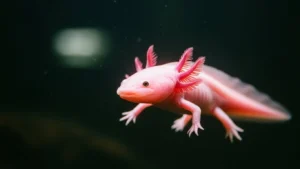
Wild axolotls are dark brown or black. Pink axolotls are a captive-bred color morph. All wild axolotls are equally endangered regardless of what color variations exist in captivity.
4. Can I release my pet axolotl into the wild to help?
Never. This is illegal and harmful. Pet axolotls carry diseases, lack survival skills, and have different genetics than wild populations.
5. Are axolotls endangered in the United States?
No wild axolotls live in the US. They’re only native to Mexico. American laws don’t classify them as endangered here.
6. Why are axolotls endangered but sold in pet stores?
Pet store axolotls are captive-bred. Wild populations are endangered, but captive populations are abundant.
7. Will axolotls go extinct?
Wild extinction is possible within 10-20 years. The species will survive through captive populations.
8. Are blue axolotls endangered?
Blue axolotls don’t exist in nature. They’re a rare captive-bred mutation. All wild axolotls are dark colored.
9. What organization protects endangered axolotls?
Multiple groups work on this: IUCN, local Mexican conservation groups, University of Mexico researchers, and international salamander conservation organizations.
10. Are axolotls protected by law?
Yes, in Mexico. They’re protected under Mexican environmental law. International trade is regulated by CITES (Convention on International Trade in Endangered Species).
11. How much does axolotl conservation cost?
Estimates suggest $2-5 million annually could significantly improve wild population chances. Current funding is much lower.
12. Can axolotls recover from endangered status?
Theoretically yes, with major habitat restoration and invasive species removal. Practically, this seems unlikely without massive investment.
13. Are axolotls the most endangered salamander?
One of them. Several salamander species face similar or worse threats. At least 20 salamander species are critically endangered.
14. Do zoos keep endangered axolotls?
Some zoos maintain breeding programs, but most captive axolotls live in research labs and private homes.
15. What percentage of axolotl habitat has been destroyed?
Over 95%. They once lived throughout Valley of Mexico’s lake system. Now only small sections of Xochimilco remain.
16. Are there wild axolotls anywhere besides Mexico?
No. They’re endemic to the Valley of Mexico. Nowhere else has natural wild populations.
17. How do scientists count endangered axolotls?
Through nighttime surveys with nets and careful searching. It’s extremely difficult because axolotls hide and populations are tiny.
18. Can breeding programs bring axolotls back?
Only if habitat is restored first. You can’t release captive-bred animals into polluted, invasive-fish-filled water.
19. Are golden albino axolotls endangered?
Golden albinos are captive-bred morphs. Wild axolotls are dark colored. The golden color doesn’t exist in nature.
20. How can I help endangered axolotls?
Donate to conservation organizations, spread awareness, care for pet axolotls responsibly, avoid products from Xochimilco that harm the environment, and support Mexican conservation efforts.
The Bottom Line on Axolotl Endangerment
Are axolotls endangered? Absolutely. Wild populations face imminent extinction despite millions thriving in captivity.
After three years of studying these incredible animals and visiting their dying habitat, I believe we’re watching a conservation failure in real-time. The situation requires urgent action that isn’t happening fast enough.
The good news? Axolotls won’t disappear completely. Captive populations ensure the species survives. Research continues. Some small conservation efforts show promise.
The bad news? An entire ecosystem is collapsing. Within my lifetime, children might only see axolotls in aquariums, never in nature. The last wild axolotl could die in the next 5-10 years.
Every responsible pet owner, researcher, and conservationist plays a role in this story. Understanding the endangered status of wild axolotls is the first step toward appreciating these amazing creatures and supporting efforts to save their natural home.
The clock is ticking for wild axolotls. What happens next depends on whether we care enough to act.
Administrator
Abdul Wasay is the founder and lead author of Axolotl Portal, a trusted site for axolotl care. He spent almost nine months learning about axolotls, including their tanks, feeding, water care, and common health problems. His knowledge comes from trusted vets, research, and real experience from long term axolotl owners. All Posts by
Related Guides
What Substrate is Safe for Axolotls?
Abdul Wasay Khatri
Do Axolotls Need an Air Pump?
Abdul Wasay Khatri
What Will Make My Axolotl Happy? A Complete Guide to Axolotl Care
Abdul Wasay Khatri
Axolotl vs Salamander: What’s the Real Difference?
Abdul Wasay Khatri
Are Axolotls Legal In California? Here’s The Truth (2026)
Abdul Wasay Khatri
How Do You Spell Axolotl? (Plus Why It’s So Tricky!)
Abdul Wasay Khatri
Emergency Axolotl Care: What to Do in Critical Situations
Abdul Wasay Khatri
Why Did Bill Cipher Say “Axolotl”? Decoding Gravity Falls’ Cryptic Final Message
Abdul Wasay Khatri
How Often Do You Feed an Axolotl?
Abdul Wasay Khatri
Will Axolotls Eat My Fish?
Abdul Wasay Khatri