
Can Axolotls Live Out of Water?

No, axolotls cannot live out of water. They’re fully aquatic salamanders that breathe through gills and need to stay submerged their entire lives. Unlike other salamanders that go through metamorphosis and develop lungs for land, axolotls remain in their juvenile water-breathing form forever. They can survive out of water for only 5-10 minutes before their gills dry out and they suffocate. Even brief exposure causes extreme stress and tissue damage. You should never take an axolotl out of water except during quick tank transfers, and even then, keep them in a container with water.

Why They Must Stay Underwater
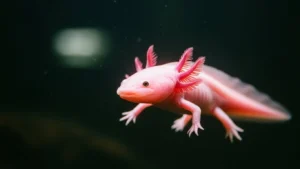
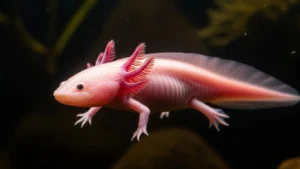
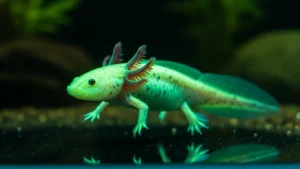
Their gills are the key difference. Those feathery branches on the sides of their head pull oxygen from water, not air. When exposed to air, the gill filaments collapse and stick together, blocking oxygen absorption. Think of it like trying to breathe through a wet towel the tissue needs water flowing over it to work properly.
They also breathe through their skin. Axolotl skin stays thin and permeable to absorb oxygen from surrounding water. Air dries their skin within minutes, creating painful cracks and damage. Once dried out, the skin can’t absorb oxygen even if you put them back in water right away. Recovery takes days, and sometimes the damage becomes permanent.
Their bodies aren’t built for gravity outside water either. Water supports their weight and organs. On land, their internal organs press down in ways they’re not designed to handle. This causes stress and potential internal injuries, especially in larger, heavier axolotls.
What Happens During Water Changes
You don’t need to remove your axolotl during water changes. Leave them in the tank and use a gravel vacuum or siphon to remove old water from one side while they hang out on the other side. They handle the water level dropping temporarily without problems.
If you absolutely must move them like during a full tank cleaning or emergency use a container filled with their tank water. A plastic tub or large bowl works fine. Keep the transfer time under 2-3 minutes. Never use a net because it removes their protective slime coat and damages their delicate gills. Scoop them gently with a soft container or your wet hands.
Some owners report their axolotl jumping out of the tank. This happens when water quality drops and they’re trying to escape bad conditions. Always keep a lid on your tank with small air holes. If you find one on the floor, put it back in clean, cool water immediately and watch for signs of gill damage over the next few days.
Quick Questions
Do axolotls ever go on land in the wild?
No, wild axolotls spend their entire lives in lakes and canals. They never leave water voluntarily under natural conditions.
Can axolotls breathe air at all?
They have rudimentary lungs and can gulp air from the surface occasionally, but this doesn’t provide enough oxygen to survive. It’s supplemental only.
How long can an axolotl survive during a tank transfer?
Keep transfers under 2-3 minutes. They can technically survive 5-10 minutes, but every second out of water causes stress and potential harm.
What should I do if my axolotl jumps out?
Put it back in clean, dechlorinated water immediately. Check for injuries, especially on the gills. Monitor closely for the next 48 hours for signs of infection.
Will my axolotl try to escape the tank?
Only if something’s wrong usually poor water quality, wrong temperature, or stress from tank mates. A happy axolotl stays submerged willingly.
Administrator
Abdul Wasay is the founder and lead author of Axolotl Portal, a trusted site for axolotl care. He spent almost nine months learning about axolotls, including their tanks, feeding, water care, and common health problems. His knowledge comes from trusted vets, research, and real experience from long term axolotl owners. All Posts by
Related Guides
How to Care for Axolotl Eggs: A Complete Hatching Guide
Abdul Wasay Khatri
Can Two Axolotls Live Together Safely?
Abdul Wasay Khatri
How to Draw an Axolotl: Complete Guide for Beginners and Artists
Abdul Wasay Khatri
Emergency Axolotl Care: What to Do in Critical Situations
Abdul Wasay Khatri
Where Are Axolotls Found?
Abdul Wasay Khatri
Can Two Axolotls Live Together?
Abdul Wasay Khatri
Why Does My Axolotl Smile? The Cute Truth Every Owner Should Know
Abdul Wasay Khatri
Do Axolotls Have Scales? The Skin Truth
Abdul Wasay Khatri
Is It Legal to Own an Axolotl in Texas? The Complete Answer
Abdul Wasay Khatri
How Do I Move or Transport an Axolotl Safely?
Abdul Wasay Khatri